In Grafton Library, something new is happening, and students are feeling the difference.
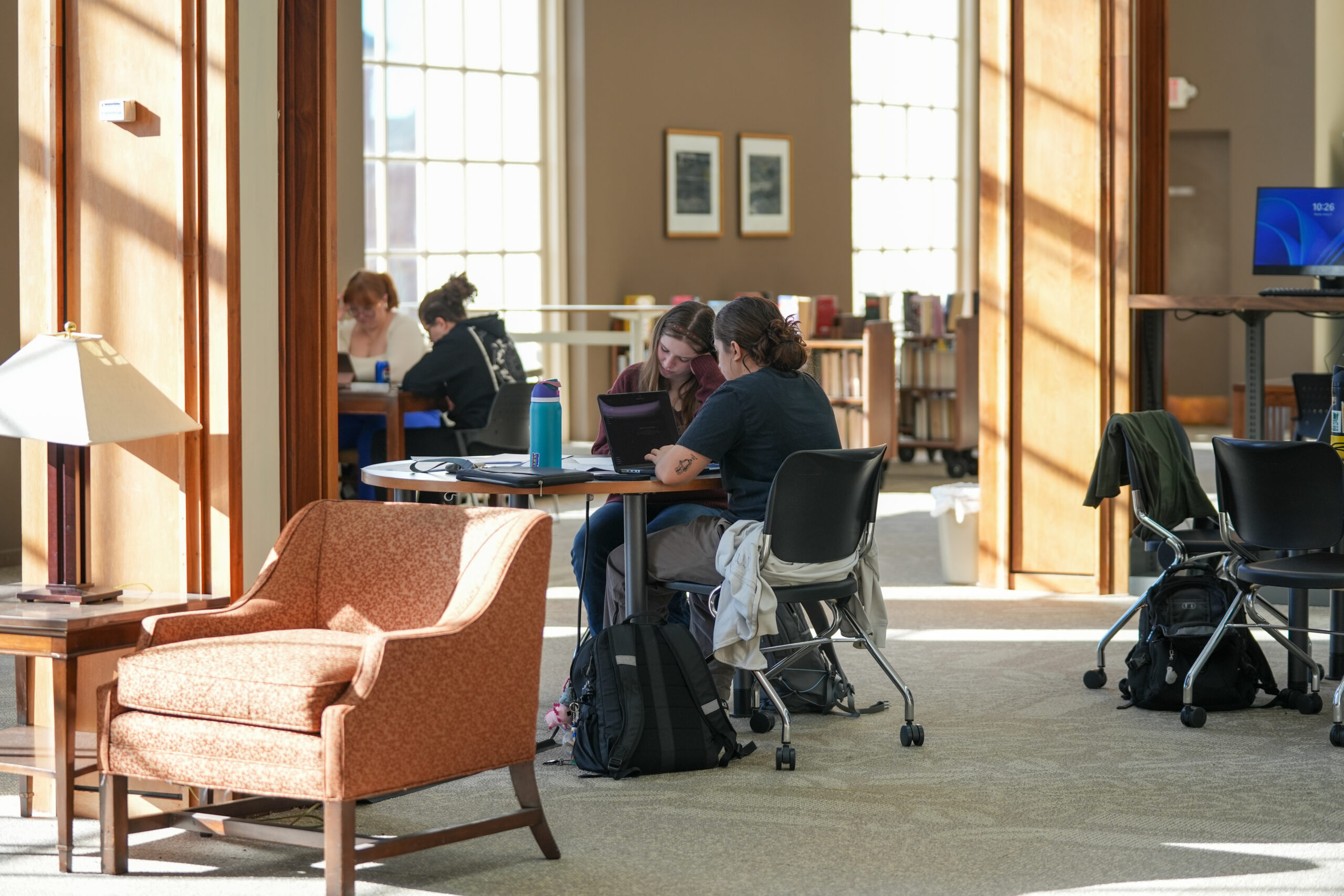
The Commons, Mary Baldwin University’s unified student support hub, brings together the library, the Academic Resource Center (ARC), the McCree Center for Career Success, the Office of Inclusive Excellence, and even essential campus services like the mailroom and print services in one shared, highly visible space. The goal is simple: make it easier for students to find help — and to discover resources they didn’t even know they needed.
Just one semester in, the impact is measurable. The Commons saw a 33% increase in overall appointments this fall, and 100% of first-year residential students engaged with the McCree Center during their first week on campus. Students are not only using more services, they’re building deeper relationships and moving more confidently between academic, personal, and professional support.
A More Natural Path to Help
Before The Commons, students often had to navigate different buildings and offices for assistance. Now, a question that starts at the circulation desk can lead to tutoring, career coaching or help navigating campus systems — all in one visit.
“Having everything in one building has led to a new way to interact with students,” said Holly Smartt, instruction and outreach librarian.
Smartt recalls meeting a new student who first stopped by the library for help with accommodations paperwork. That initial conversation led to introductions across The Commons, and the student soon began visiting multiple offices regularly.
“It’s been really cool to see students realize that they can come to the library, and approach librarians, for more than just research help.”
That kind of handoff — warm, personal, and immediate — is becoming routine. A librarian might suggest a student visit the McCree Center for help turning a research project into résumé language. A tutor might walk a student upstairs to meet with a career coach. Staff say these transitions feel less like hopeful referrals and more like shared support.
Collaboration that Students Can Feel
Behind the scenes, the offices in The Commons are working together more closely than ever. The “Commons Crew,” an inaugural team of 13 student workers, serves as the frontline of this effort, trained by representatives from the library, the ARC, and the McCree Center to act as universal ambassadors.
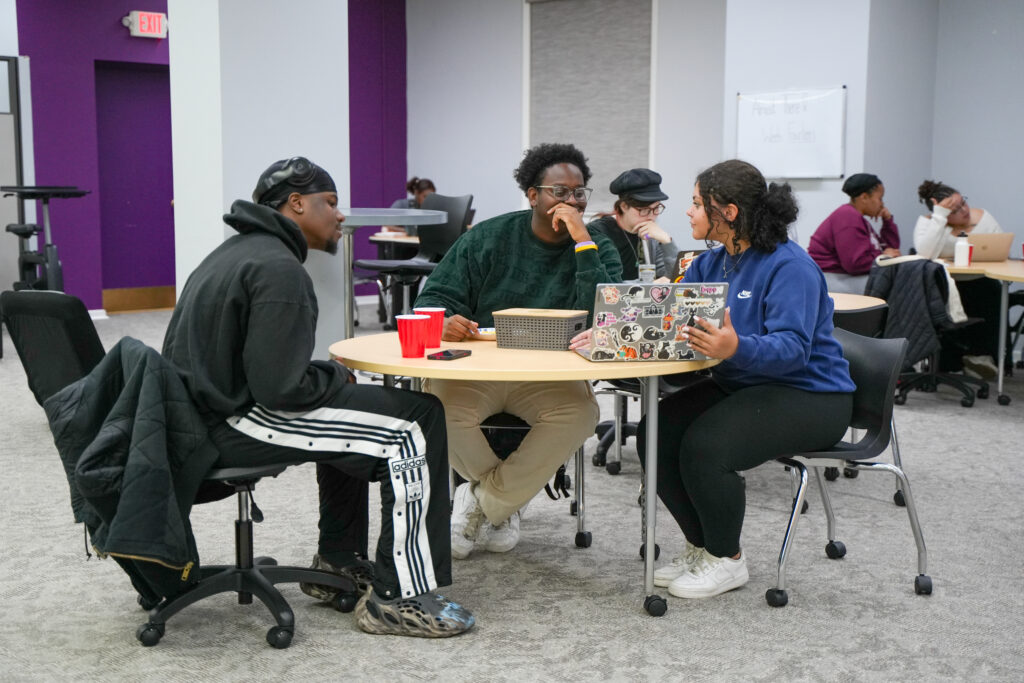
Staff from different departments now regularly coordinate programming. For example, the Office of Inclusive Excellence partnered with the ARC for a Caribbean Student Association study night, while the McCree Center’s “Don’t Cancel Class” initiative — which invites professors to bring in McCree staff if a professional conference, meeting, or other commitment pulls them away from campus — led to a 1,000% increase in career-focused classroom presentations compared to the previous year.
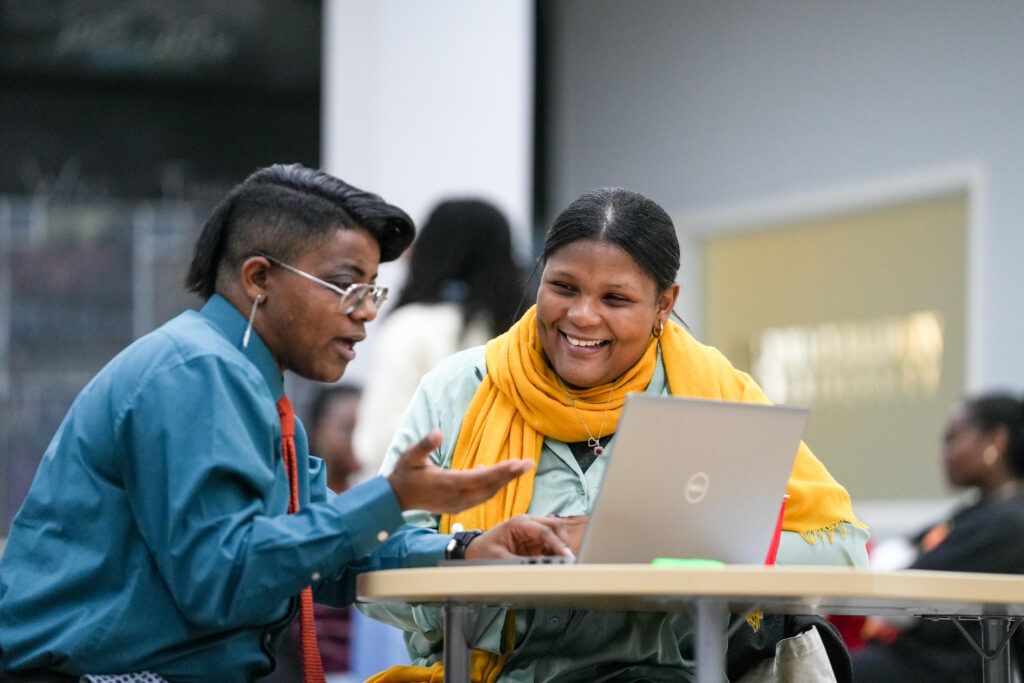
Christina Harris, director of tutoring, has seen how this integration supports success. In the ARC alone, students utilized 411 hours of writing lab support between August and December. The result, she said, is a more connected experience, rather than a series of separate stops. This is particularly visible in courses like INT 120 (Essentials of Scholarship), where students engaged with consistent tutoring were significantly more likely to pass.
Not Just a Place to Study
The physical environment is reshaping how students see support. Beyond traditional study, the space hosted over 20 cultural and leadership programs this fall — including the Sankofa Leadership Conference and Las Posadas — drawing more than 900 participants.
Even visits to the mailroom have become an informal opportunity for students, faculty, and staff to cross paths and build networks that didn’t exist when services were more siloed.
Lowering Barriers, Raising Confidence
Staff see The Commons as a tool for reducing the stigma around asking for help. The ARC is even moving toward a “distributed support model,” embedding tutoring and group study into high-traffic campus spaces to create a predictable weekly rhythm for students.
That matters to tutors like senior Treyvon Taylor, who has helped students in the ARC while also working with the McCree Center on his own job applications for sales positions.
Taylor explained his favorite part: “There’s nothing better than approaching a student who hasn’t yet asked for assistance and just offering ‘hey, do you need some help,’ and seeing the relief on their faces.”
One Visit, Many Pathways
The Commons is still in its early stages, but its model is already changing the rhythm of student support.
By bringing academic, professional, and personal resources together, The Commons is helping students move through college with fewer barriers.
As one student from the Class of 2029 put it: “The Commons has made it possible for me to come in, study, ask questions, and get the answers I need to keep going.”