Two VWIL cadets spent 19 days at Naval Station Great Lakes learning what the Navy expects of its officers.
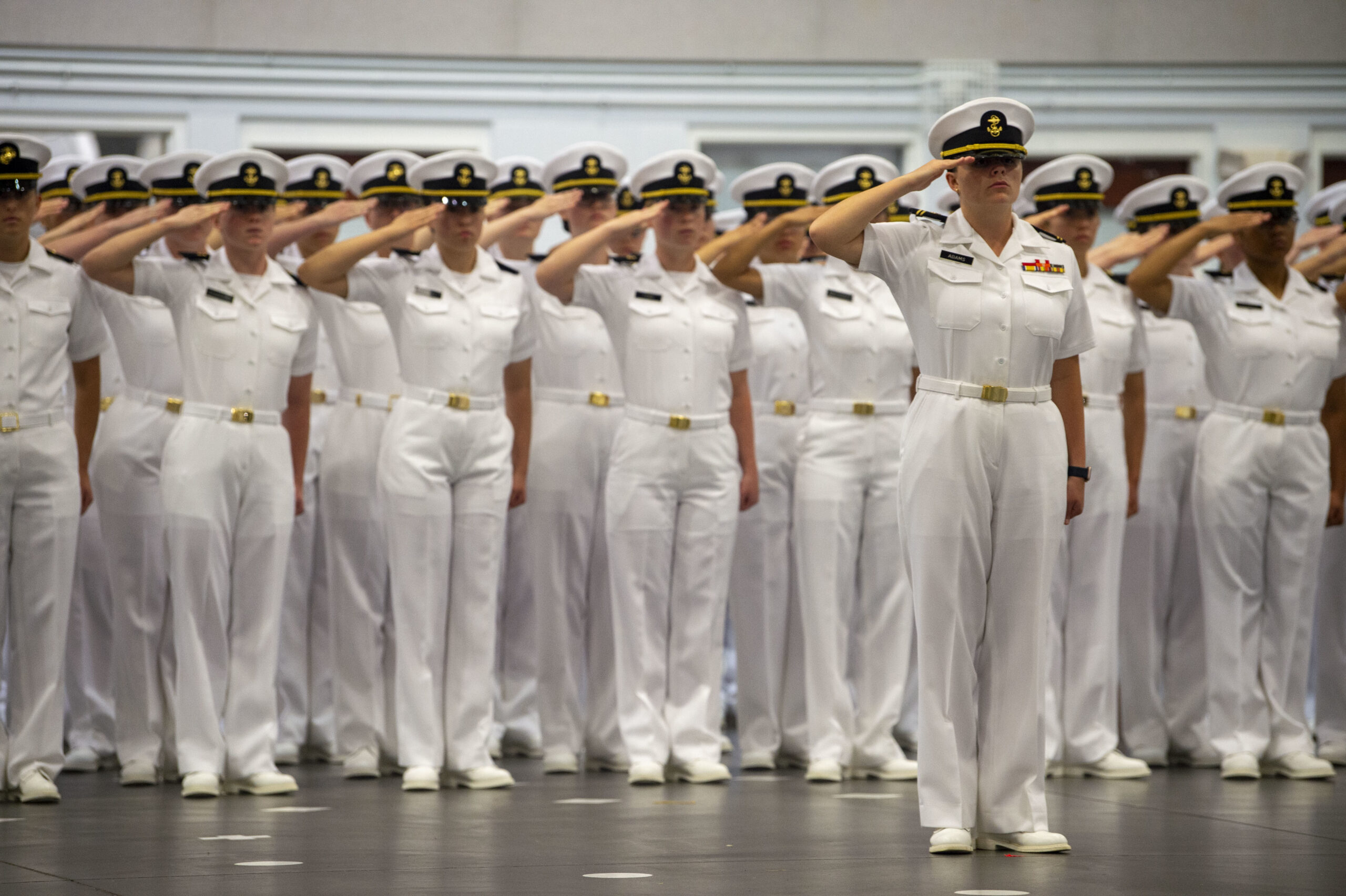
Adeline McLeod ’29, and Amirah Johnson ’27 spent 19 days of their summer at Naval Station Great Lakes, Illinois, finding out what the Navy expects of its officers.
The two Virginia Women’s Institute for Leadership (VWIL) cadets — one senior and two rising sophomores — traveled together to New Student Indoctrination (NSI), the Navy ROTC program that introduces incoming midshipmen to the demands, expectations, and discipline of military life. It is the Navy’s first real filter: three weeks of physical training, drill, classroom instruction, and practical exercises designed to establish a baseline before students return to their units for the academic year.
Their training covered weapons familiarization and live fire, ship handling, knot tying, and the leadership traits expected of future Navy and Marine Corps officers. They also completed the CBRN confidence chamber — a controlled exposure exercise in which students enter a sealed room in protective gear, then remove their masks. The point is not the discomfort. It is learning that the equipment works and that you can function while your body is telling you otherwise.
Johnson came away with a method she now runs before anything difficult.
“Take a second and envision yourself completing the task and always think positively,” Johnson said.
That kind of training is familiar territory at VWIL. As the nation’s only all-female corps of cadets, VWIL builds its program around structured physical training, a teamwork-based environment, and a leadership studies certificate that asks cadets to motivate others, lead through service, and produce results.
Cadets commission into every branch and go on to careers in military and civilian service alike — 58% of VWIL graduates pursue military service, 42% government service, per current viewbook figures.
McLeod and Johnson return to campus this fall with sharper confidence, a working understanding of military leadership, and 19 days of proof that they can handle more than they thought — the same thing VWIL has been telling them since the day they arrived.