At 18, Adiba Tojimirzaeva is graduating from college, and already looking toward an MD/PhD
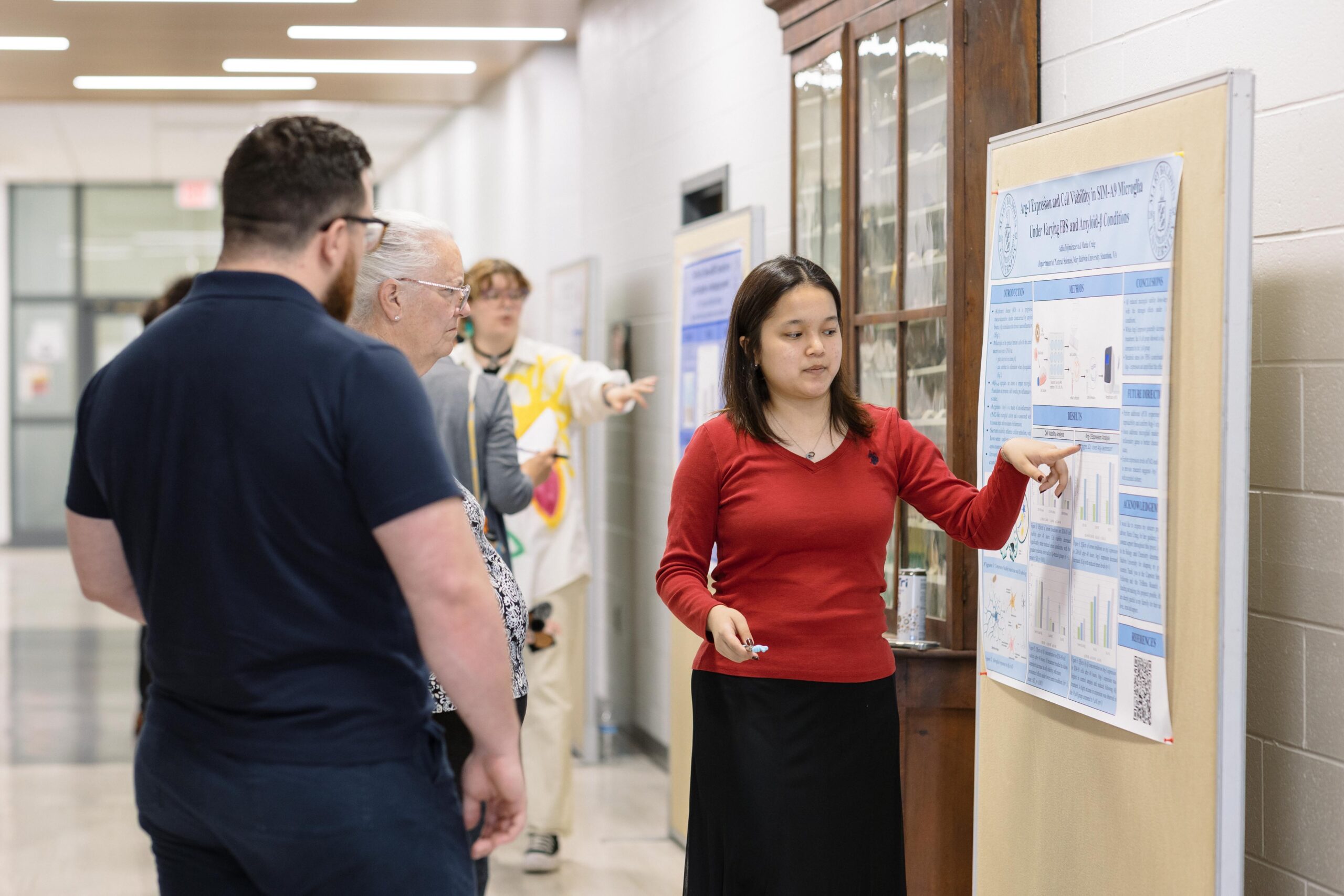
When Adiba Tojimirzaeva arrived at Mary Baldwin University in 2022, she was just 14 years old, traveling from Uzbekistan to begin a college experience she had been working toward for years.
“I was really scared, to be honest,” she said. “I had always wanted to study abroad in the U.S., but actually making that decision — it felt intense.”
Now, four years later, she graduates from MBU’s Program for the Exceptionally Gifted (PEG) as one of its youngest students, and one of its most accomplished. Her next step includes graduate study offers from some of the most selective institutions in the country, including Harvard, the University of Pennsylvania, Johns Hopkins, and the University of California, Berkeley.
A Fast-Moving Academic Journey
Tojimirzaeva’s path to MBU began in a selective presidential school in Uzbekistan, designed for advanced learners. There, she completed Cambridge AS and A-Level coursework by the time she was in eighth grade. Around that same time, she took the English proficiency exam required for international study and began researching colleges abroad.
“I found the PEG program online and started to apply,” she said. “It just felt natural to move on to the next step.”
Still, arriving on a U.S. college campus at 14 came with challenges that went beyond academics. From navigating systems that required parental approvals to adjusting to a new culture, the transition demanded both independence and support.
“You don’t realize beforehand how much you need an adult or guardian to sign off on things,” she said. “Being that young made everything a little more complicated.”
Finding Her Place at MBU
That support came quickly once she arrived. The PEG program provided structure and guidance, while MBU’s small campus made it easier to build relationships that mattered.
“The PEG program makes sure that students feel involved and taken care of,” she said. “That really helped me to adapt.”
Equally important were the connections she formed with faculty. Initially unsure what those relationships might look like in the U.S., she found exactly what she had hoped for.
“The class sizes are really small, so building strong relationships with my professors was great,” she said. “There’s such a close relationship with faculty and staff.”
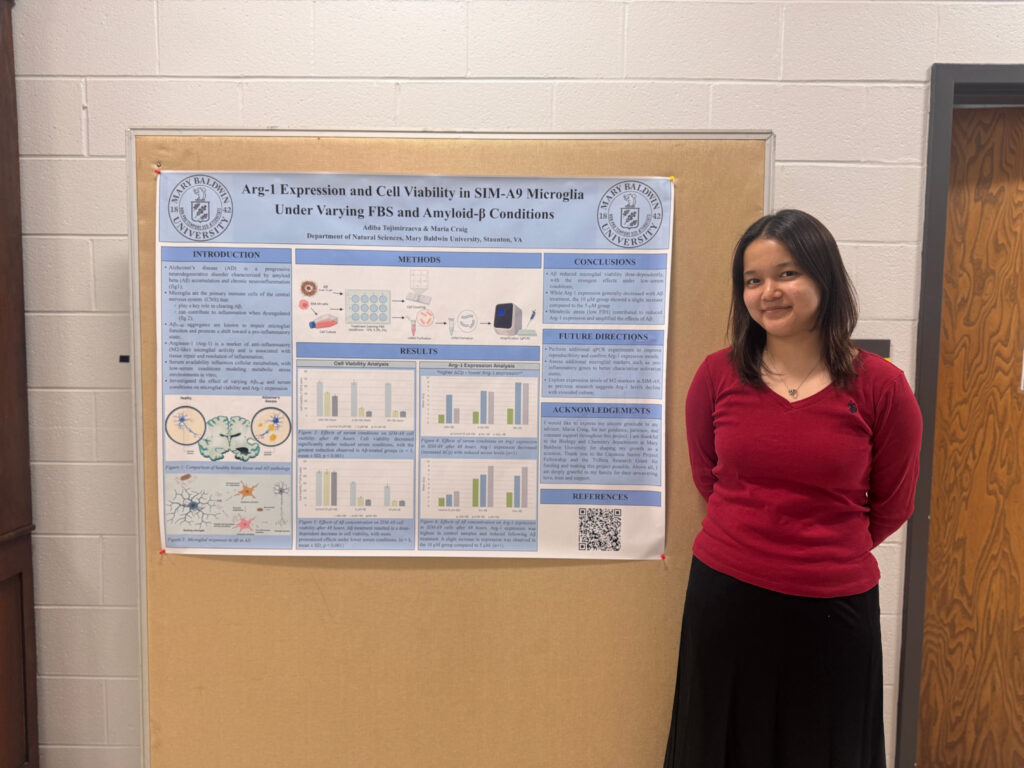
Her advisor, Associate Professor of Chemistry Dr. Maria Craig, played a central role in shaping her experience, alongside professors like Dr. Rebecca Haberman and Dr. Peter Ruiz-Haas, associate professors of biology and chemistry, respectively. Over time, she took classes with nearly every professor in the science department — an opportunity that broadened both her academic foundation and her confidence.
Curiosity Without Limits
Tojimirzaeva’s academic interests are wide-ranging by design. A biochemistry major with a minor in mathematics and additional minor in psychology, she has never felt compelled to choose just one path.
“I cannot pick one thing,” she said. “I’m interested in so much that I feel like I have to study everything I can. I especially like seeing the things I’m studying from different angles, like researching the brain and Alzheimer’s while also studying psychology.”
Mathematics has been a favorite since middle school, while psychology connects directly to her research interests in the brain and human behavior. Her long-term ambitions reflect that same breadth, with interests spanning neurosurgery, ophthalmology, and psychology — all fields that intersect with her fascination with the mind.
A Thoughtful Next Step
When it came time to apply to graduate school, Tojimirzaeva approached the process with the same intentional curiosity. Rather than focusing solely on traditional science pathways, she looked for programs that would allow her to explore the broader implications of scientific work.
She applied to six programs and was accepted to several of the most competitive in the country. Among them, she is particularly drawn to Harvard’s bioethics program and the University of Pennsylvania’s biotechnology program.
“I wanted to shift away from pure science a little bit and spend more time thinking about the humanities portion of science research,” she said.
That shift reflects a growing interest not just in how science works, but in how it shapes — and is shaped by — human experience.
Balance and Perspective
Even with an accelerated academic path, Tojimirzaeva has made space for balance. This year, she took up running as a way to step away from her studies and recharge.
“Recently, I ran and walked 83 kilometers in a single day here in Staunton,” she said. “That was fun.”
The comment is characteristically understated, but it reflects a larger pattern: a willingness to take on ambitious challenges while maintaining perspective. Her connection to family back home has also remained an important part of that balance, providing steady support throughout her time abroad.
Looking Ahead
Now 18, and preparing to turn 19 this summer, Tojimirzaeva is already thinking about the long arc of her future. She plans to pursue an MD/PhD, with the goal of becoming a practicing physician in the years ahead. That’s after her impending graduate school stint.
For students considering a similar path, her advice is grounded in her own experience: “Making connections with professors was the most important thing for me.”
At Mary Baldwin, she found people who matched her pace, supported her growth, and encouraged her to explore widely. As she prepares for what comes next, she carries with her not only a list of accomplishments, but a way of thinking that will continue to shape her path forward.