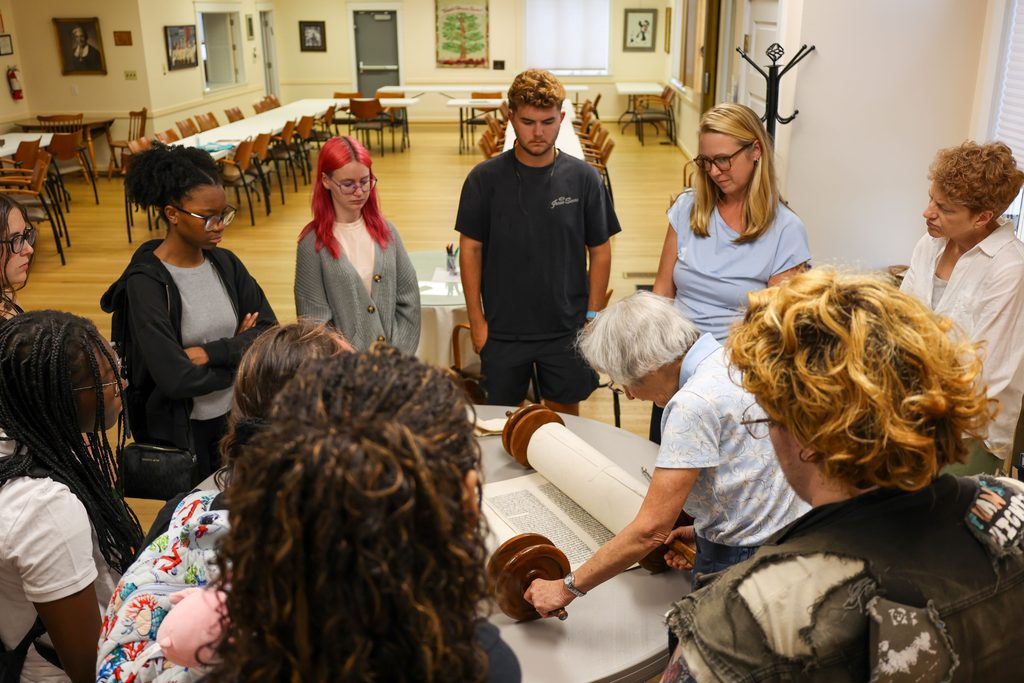
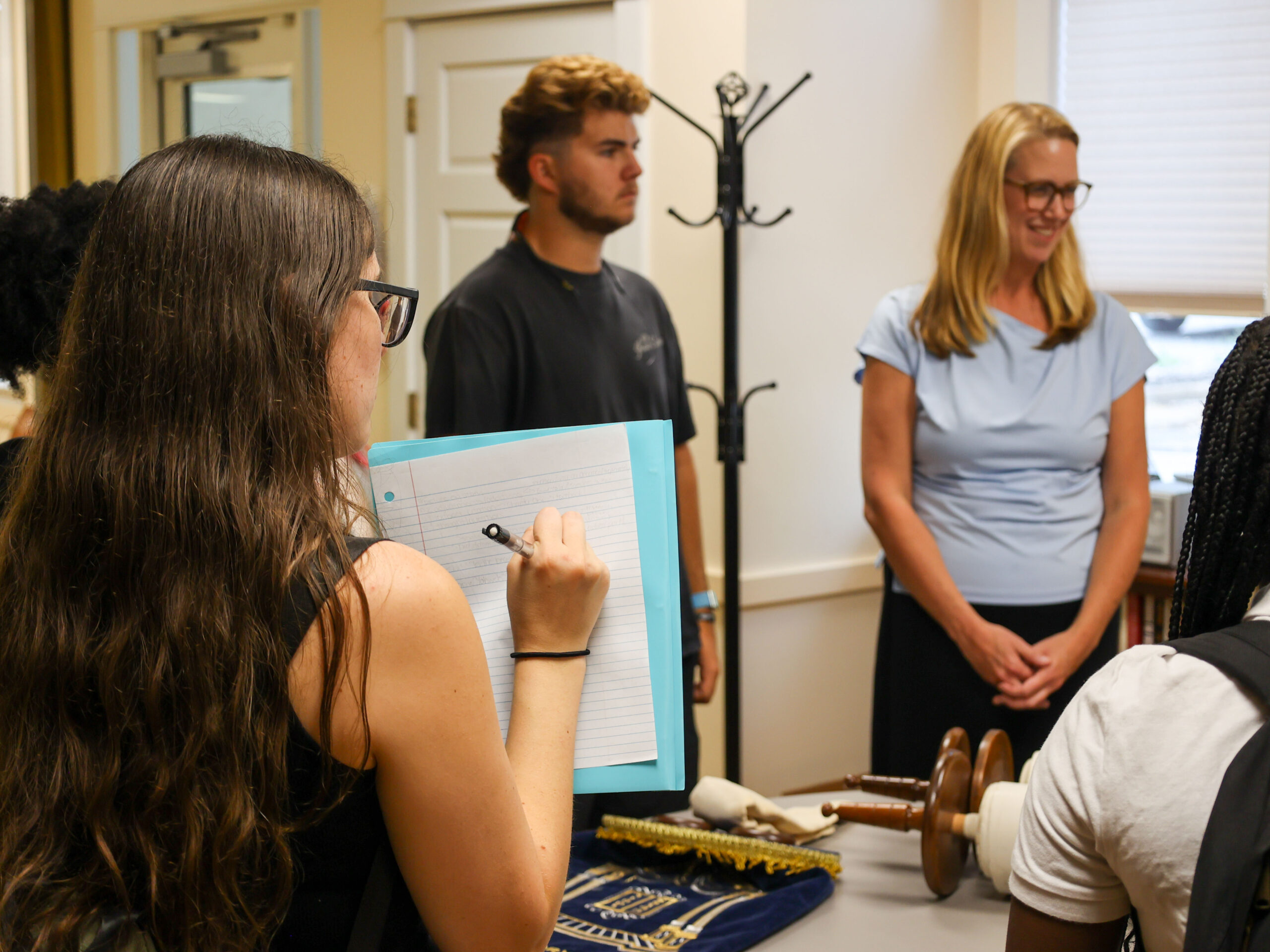
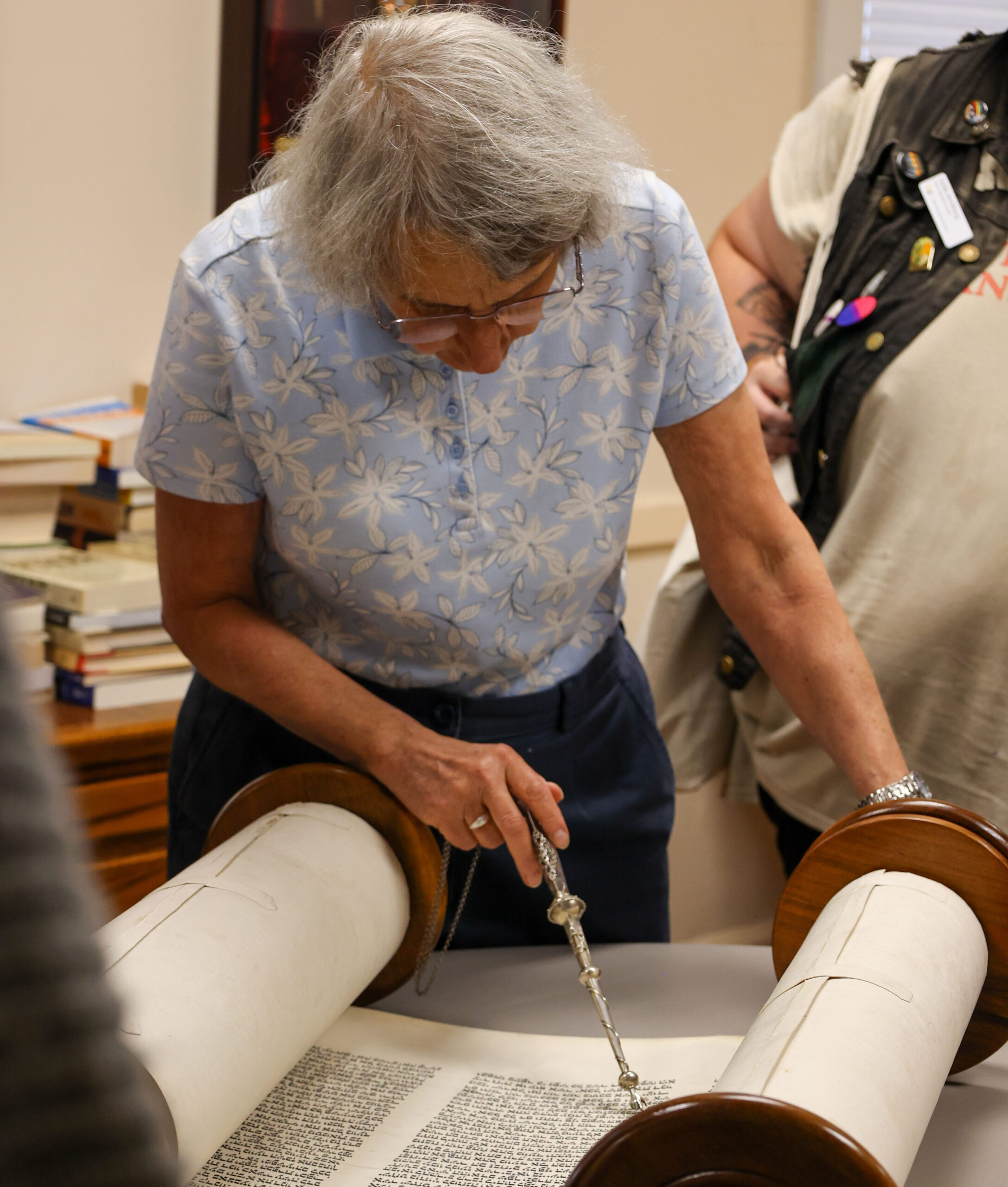
A late-August visit to Staunton’s Temple House of Israel gave students a hands-on introduction to Jewish tradition — and a glimpse of an expanded pluralism initiative continuing through 2027.
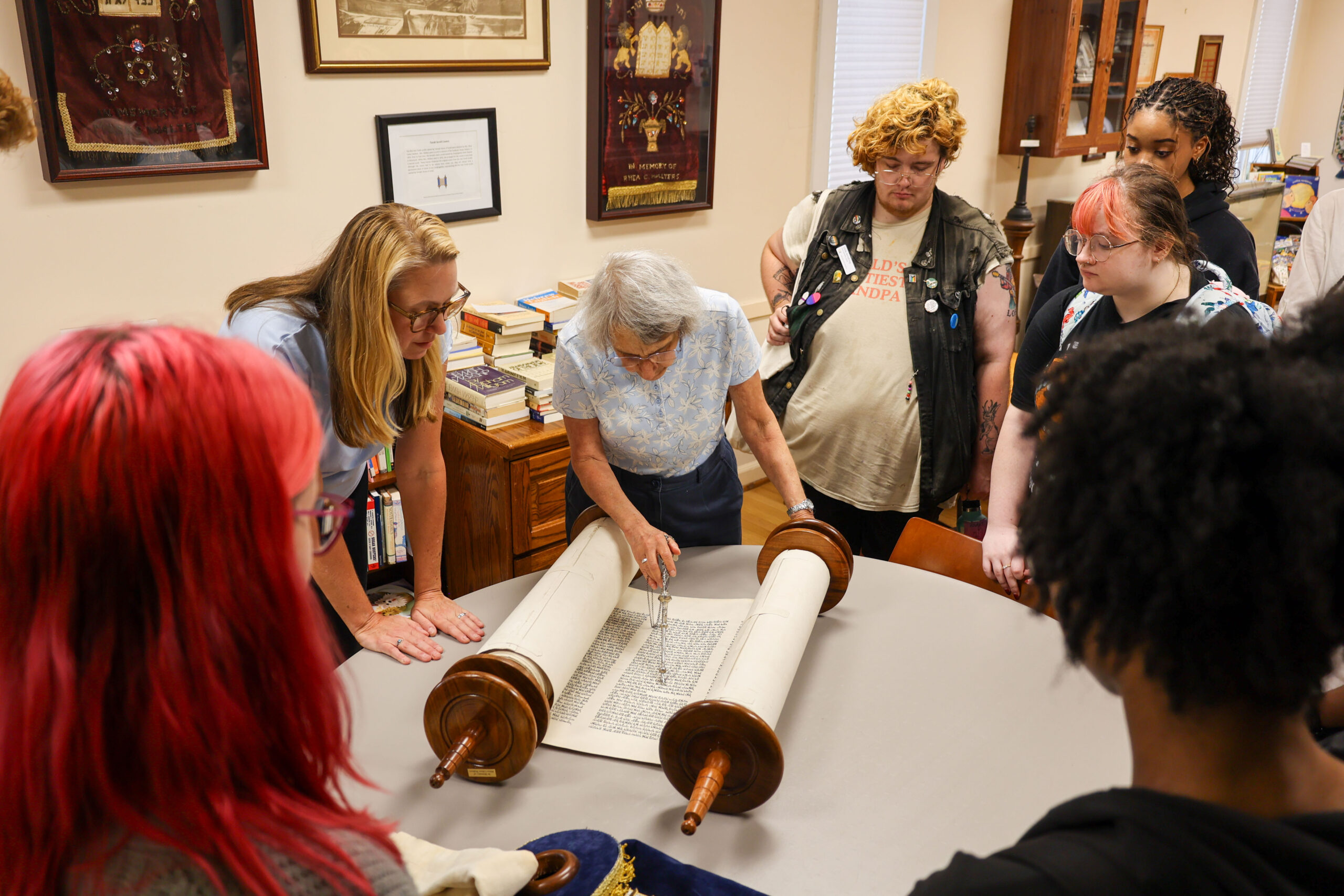
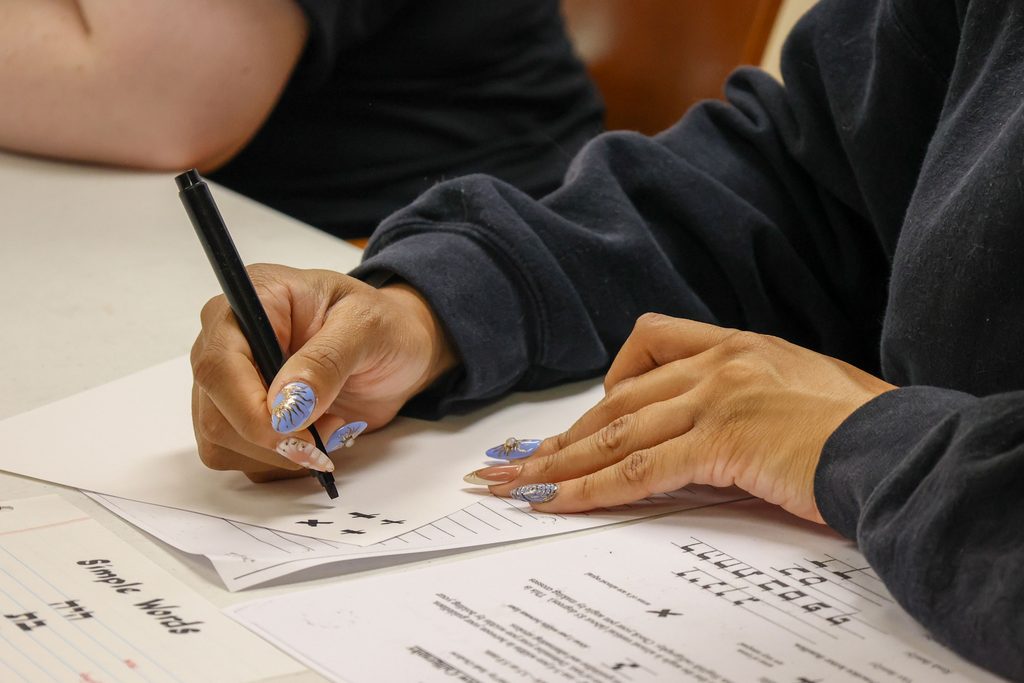
As Jewish communities observe the High Holy Days, a group of Mary Baldwin University students enter the month with something new: a working knowledge of Hebrew calligraphy, gained during a recent visit to Temple House of Israel in downtown Staunton.
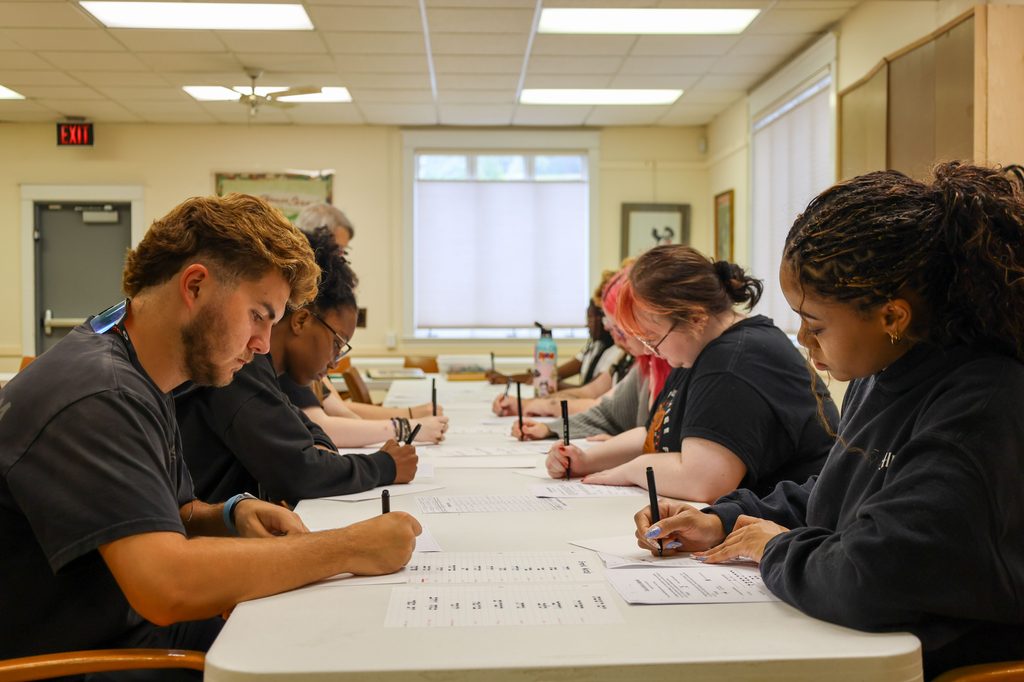
The visit brought students from Chaplain Katherine Low’s course (Religion 272: Adam, Eve, and Monsters) together with members of MBU’s campus interfaith group for an afternoon of Hebrew calligraphy instruction and Jewish history. It was hosted by longtime temple member Ruth Chodrow, a veterinarian and former part-time JMU faculty member who has practiced Hebrew calligraphy for roughly 35 years.
“I host these events because I enjoy Hebrew calligraphy and I like to share it with people,” Chodrow said. “A lot of people don’t know much about Jewish religion in general, and I like educating folks. It’s a thrill for both me and the student when, after a fairly short time, a student can put out real words in Hebrew calligraphy.”
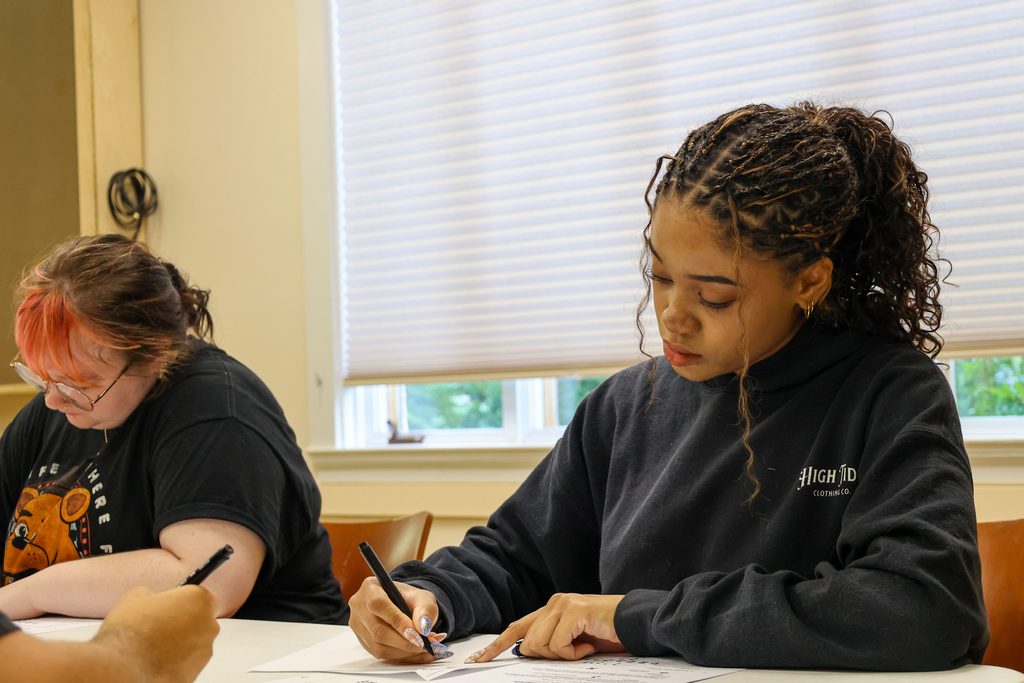
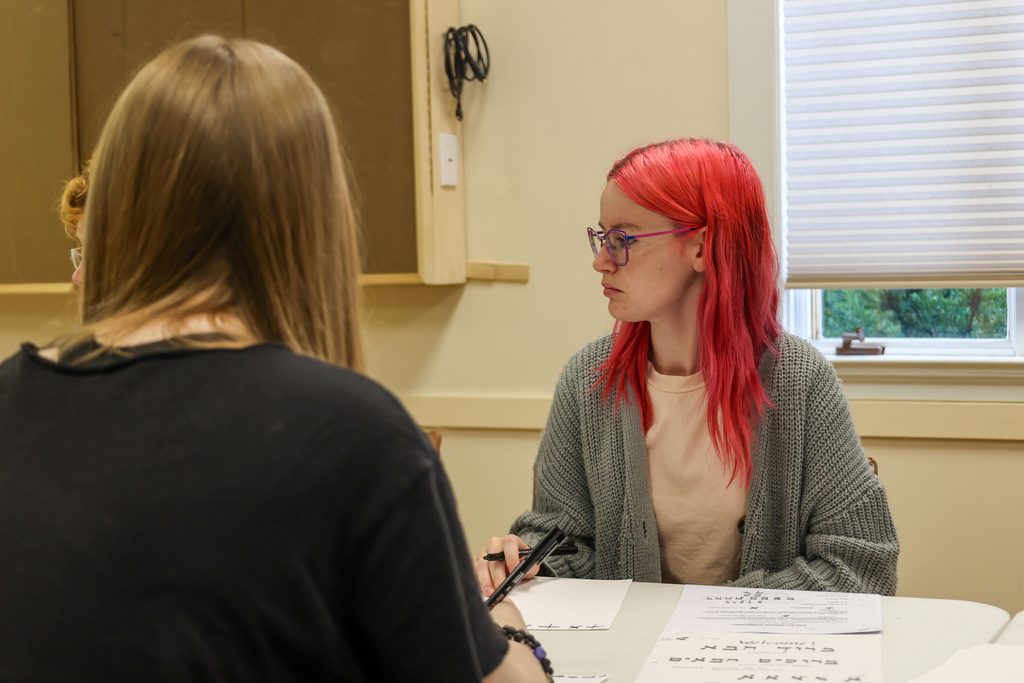
For Faith Campbell ’27 (pictured), the visit expanded a still-forming understanding of religious traditions beyond her own.
“It’s an immersive experience, and prior to taking this class I didn’t have much experience with religions outside my own,” Campbell said. “It’s enlightening — and the academic environment makes it open and welcoming to learn and make mistakes.”
A Growing Interfaith Initiative
The Temple House of Israel visit is one piece of Advancing Campus Pluralism, a multi-year initiative at MBU supported by Interfaith America and the Council of Independent Colleges of Virginia (CICV). The two organizations have extended the grant into the 2026-2027 academic year with an additional $10,000 in funding, building on programming launched in previous years.
“It has always been the goal of my chaplaincy to promote pluralism and interfaith connection,” said Dr. Low, who has worked with Interfaith America since becoming university chaplain in 2011. “The Hebrew calligraphy event at Temple House of Israel is an example of a community-based activity that fosters positive engagement with religious diversity.”
Faculty Development at the Center
In August, a cohort of MBU faculty and staff attended student leadership and belonging sessions at Bridgewater College, exploring how peer institutions welcome incoming students and prepare student leaders for community-building in a pluralistic environment. The cohort has already developed a welcome week belonging activity, with additional programming planned for the coming year.
Dr. Jenney, this year’s Pluralism Fellow, attended Interfaith America’s Teaching Interfaith Understanding seminar over the summer and has developed a Pluralism module on Canvas that faculty can integrate into online and on-campus courses. Ongoing faculty workshops offer support for adding pluralism activities across the curriculum.
Bridges, Not Bombs
Dr. Low has previously described pluralism as active engagement across differences of identity, belief, and perspective — the practical work of learning to listen, understand, and collaborate rather than defend or debate. “Instead of building bombs of destruction, we’re building bridges of understanding,” she said in an earlier interview.
The Temple House of Israel visit is a small, concrete example of that work: a couple of hours spent hearing a dynamic history from a local expert.
As Chodrow put it: “It’s a thrill for both me and the student.”
Photo Gallery