From first-year courses to campus-wide programming, new grants are helping MBU students build the skills to navigate differences and lead with understanding.
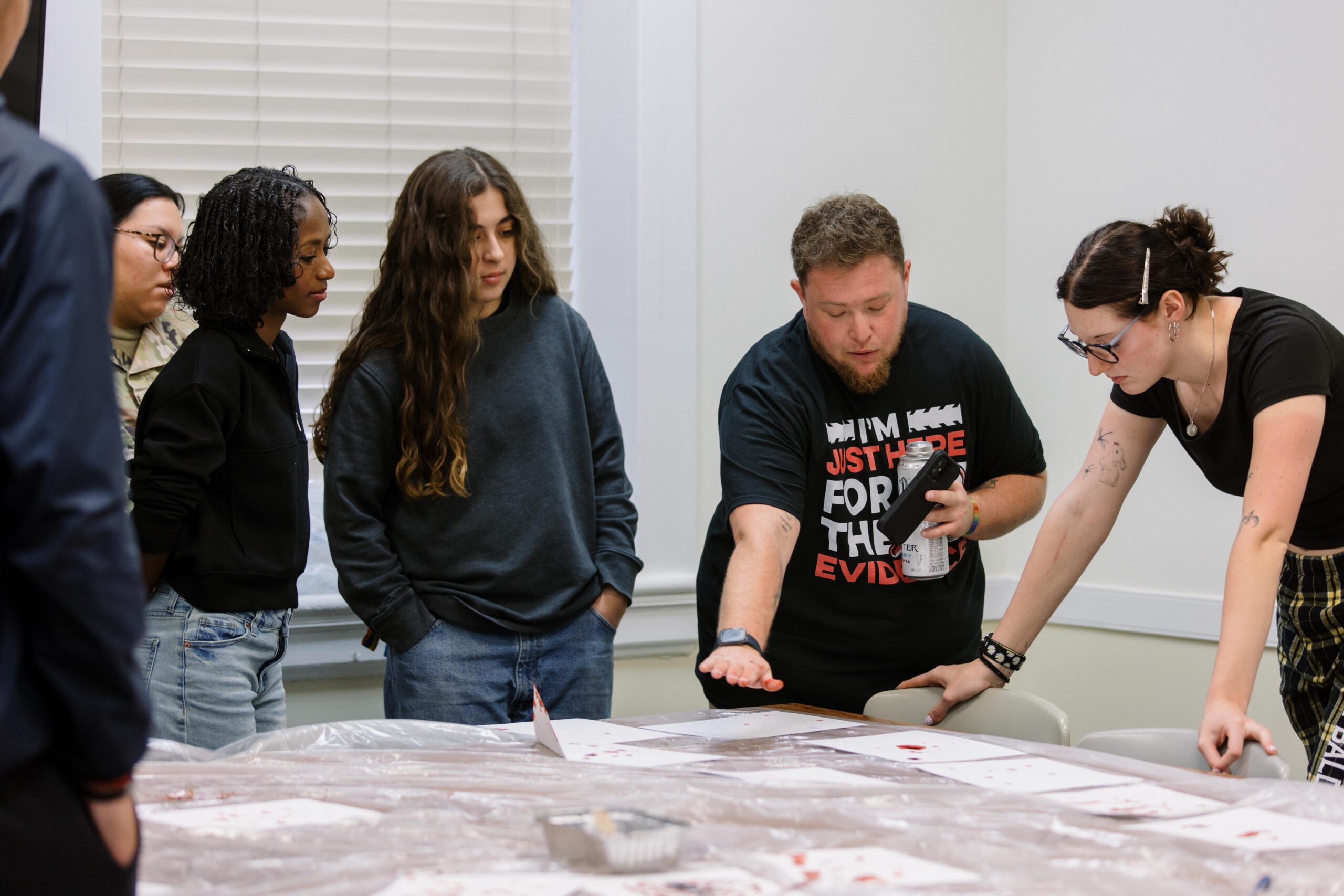
Mary Baldwin University is strengthening its commitment to preparing students for a complex, interconnected world through two new grants focused on pluralism — an approach centered on building understanding across differences, fostering civic dialogue, and working collectively for the common good.
Supported by funding from the Council of Independent Colleges of Virginia (CICV) and Interfaith America, the grants are already shaping classroom experiences, campus programming, and faculty collaboration across disciplines.
A Campus-Wide Commitment to Pluralism
For Dr. Katherine Low, university chaplain, this work builds on more than a decade of leadership in interfaith engagement at MBU.
“I’ve been working with Interfaith America since I became chaplain in 2011,” Low said. “It has always been the goal of my chaplaincy to promote pluralism and interfaith connection.”
Pluralism, as Low describes it, is about more than coexistence. It’s about active engagement — developing the skills to navigate differences in identity, belief, and perspective with curiosity and respect.
“Instead of building bombs of destruction, we’re building bridges of understanding,” she said.
That philosophy is now taking shape across campus through a $25,000 grant initiative that helps students learn how to engage productively across lines of difference.
Programming has already included an orientation event for new students, workshops within the Education and Society Neighborhood, and new initiatives led by Spencer Center fellows. The work is also being woven into broader institutional priorities, including the university’s strategic plan and its evolving approach to student skill development.
At its core, the effort aims to strengthen key elements of MBU’s academic vision like inclusivity and collaboration.
“College students are at a developmental stage where they are discovering who they are,” Low said. “The question is: how are they engaging with the differences around them? Are they becoming defensive, or are they learning how to listen, understand, and work together?”
From Dialogue to Action
In addition to co-curricular programming, a second $10,000 grant from Interfaith America is supporting faculty as they integrate civic pluralism directly into the classroom, particularly within MBU’s core curriculum.
Courses such as Identities, Communities, and Narratives are being redesigned to help students engage thoughtfully with difference through both theory and practice.
Dr. Clayton Brooks, associate professor of history and education, is among the faculty leading this effort. Her first-year course, Protest and Pluralism, explores how diverse perspectives have shaped American history — and how they continue to influence civic life today.
“We live in a society where we’re extremely divided,” Brooks said. “So the question becomes: how do we find unity? What does U.S. history tell us about our ability to work together?”
Rather than relying on a traditional survey approach, Brooks structured the course around focused thematic units — including Native American history, religion, and race relations — allowing students to explore each topic in depth through the lens of pluralism.
“Pluralism is a better modern metaphor than the old ‘melting pot’ idea,” she said. “It recognizes that conflict is inevitable in a diverse society and that by understanding the past, we can make better-informed choices about the future.”
Learning Through Conversation and Connection
In both classroom and campus settings, the emphasis is on equipping students with practical tools for engagement.
That often begins with storytelling and creating space for students to share their perspectives and understand how others’ experiences shape their views.
“It’s about moving away from debate for the sake of winning,” Low said. “Instead, we want students to learn from one another and find ways to work together toward shared goals.”
These skills are increasingly important in a campus environment where students regularly encounter differences in identity, ideology, and lived experience — whether in the classroom, residence halls, or student organizations.
Brooks has seen firsthand how these conversations resonate with students.
“They were constantly asking, ‘How does this matter for today?’” she said. “When you look at history through a specific lens like pluralism, those connections become clear — and that’s what drives engagement.”
In one early discussion, students examined the Boston Massacre, analyzing how narratives were shaped and reshaped — and drawing parallels to modern media and public discourse.
“It opened up conversations about truth, perspective, and how stories influence what we believe,” Brooks said.
Building Skills for a Shared Future
A significant portion of the grant funding is supporting faculty development and student leadership, including stipends for Spencer Center fellows and other participants contributing to the initiative.
Looking ahead, MBU plans to further institutionalize this work — including the creation of a bridge-building award to be presented at Capstone, recognizing students who demonstrate exceptional commitment to collaboration across differences.
For Low, the long-term goal is clear: to embed these skills not just in individual programs, but across the entire student experience.
“This is about preparing students for the world they’re entering,” she said. “They’re going to live and work with people who are different from them. The question is whether they’ll have the skills to engage in a way that builds understanding and moves us forward.”
At Mary Baldwin, that work is already underway — one conversation, one classroom, and one connection at a time.