Mary Baldwin honored faculty and staff members’ service (294 total years) during its annual recognition event.
Together, this year’s retirees represent areas including administrative and academic leadership, athletics, and the Virginia Women’s Institute for Leadership. Their work has shaped generations of students and left a lasting legacy for the institution’s academic programs, campus culture, and broader community.
The university also recognized faculty and staff members celebrating employment milestones for their dedicated service to the university.
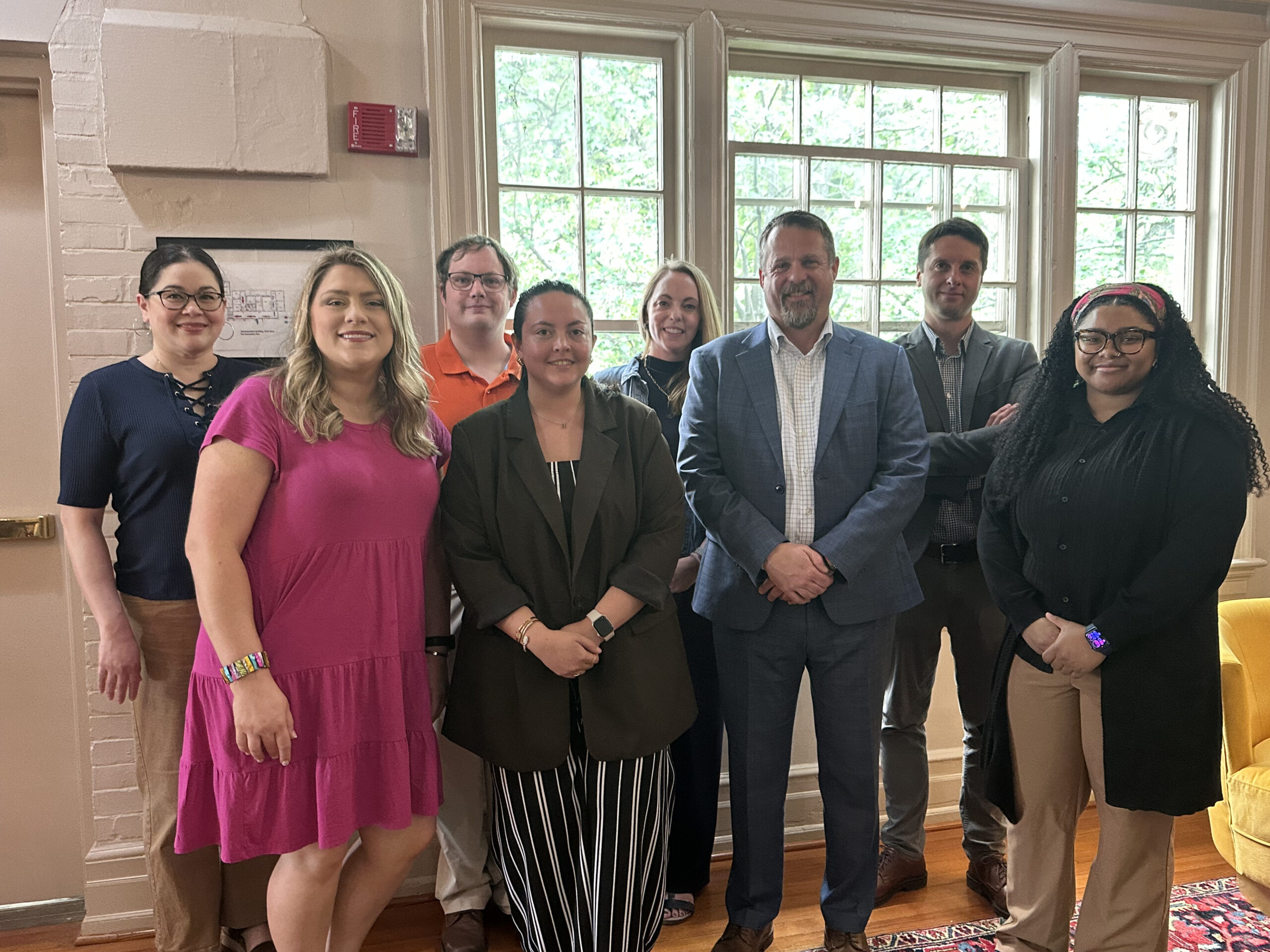
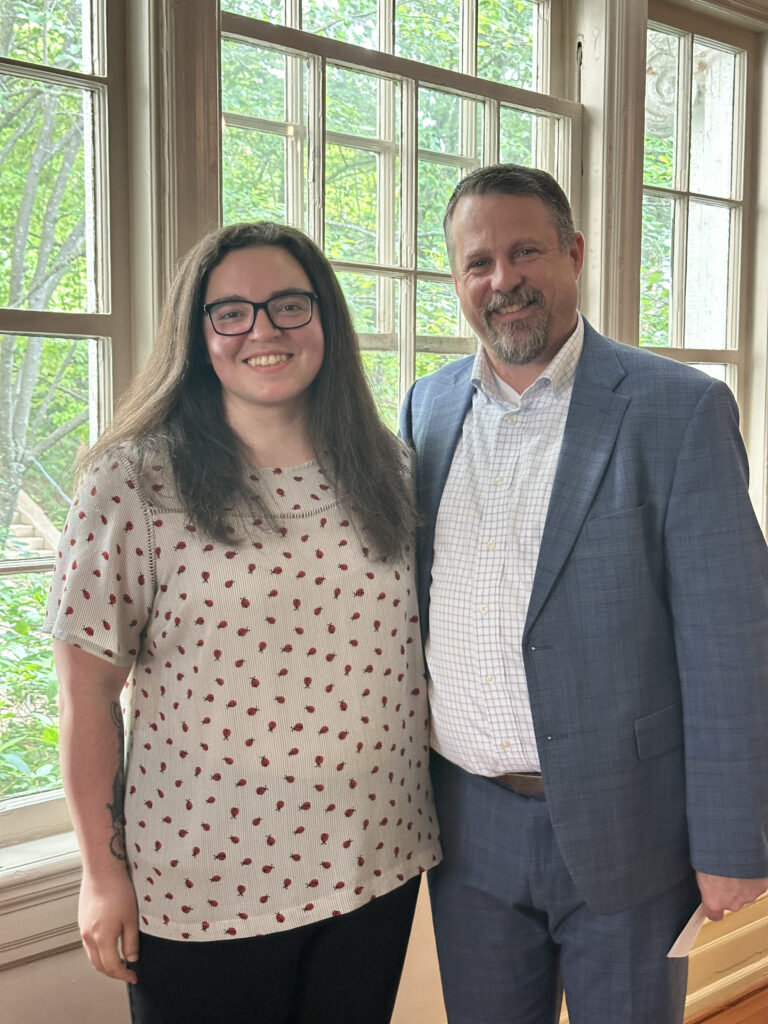
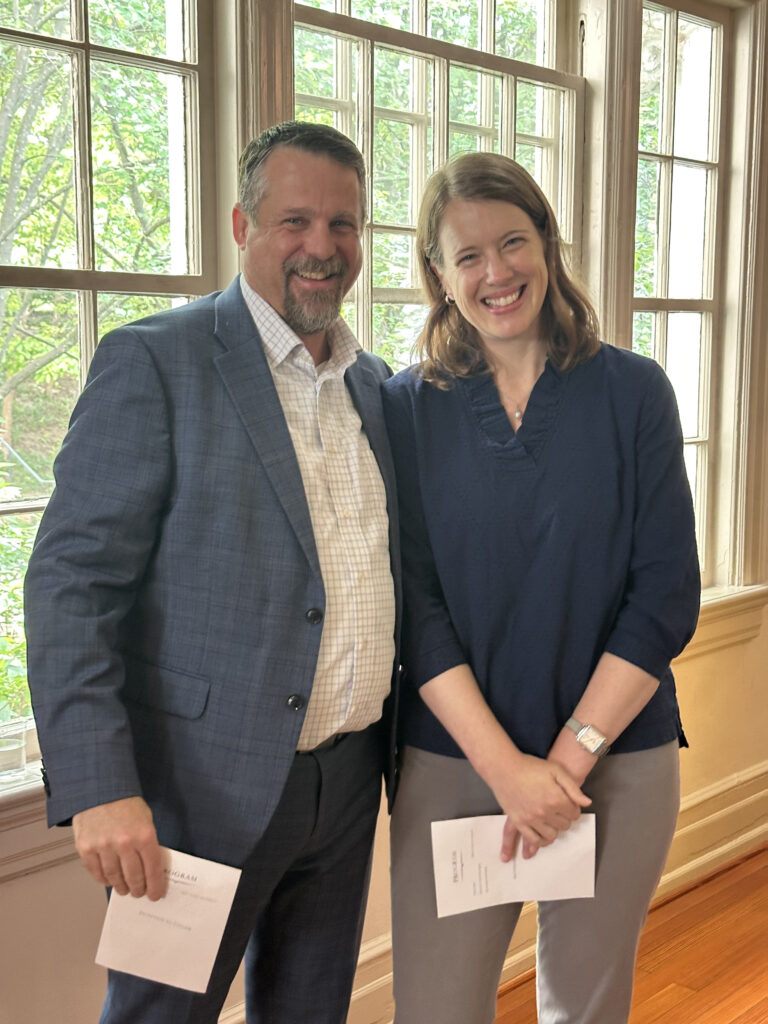
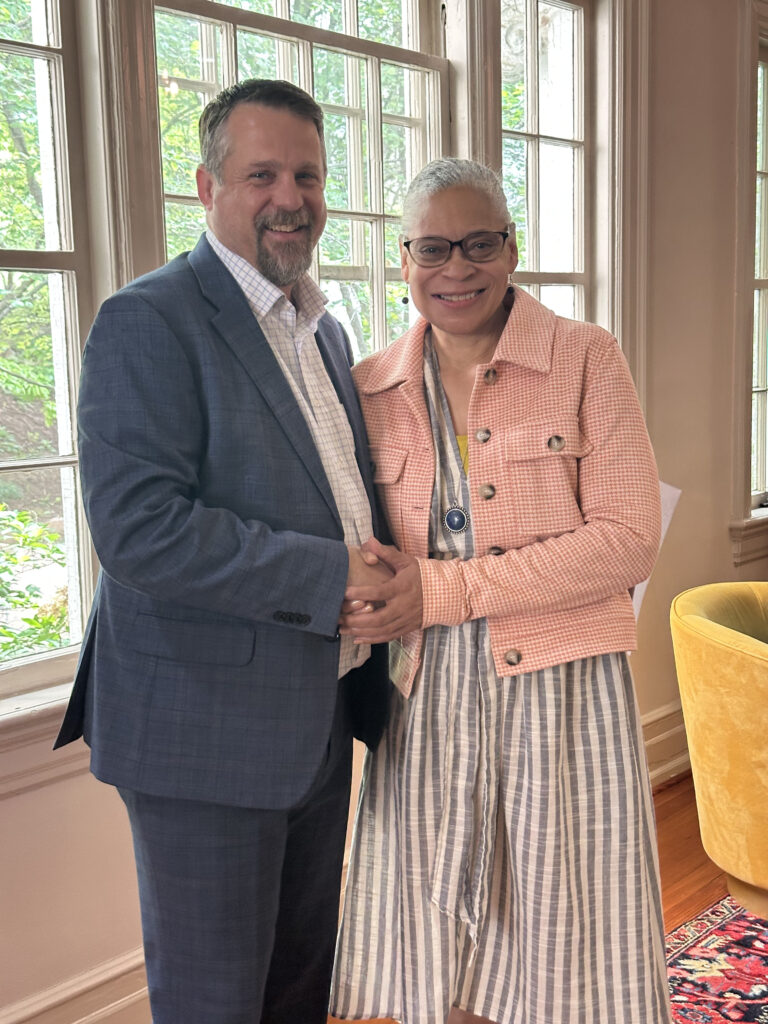
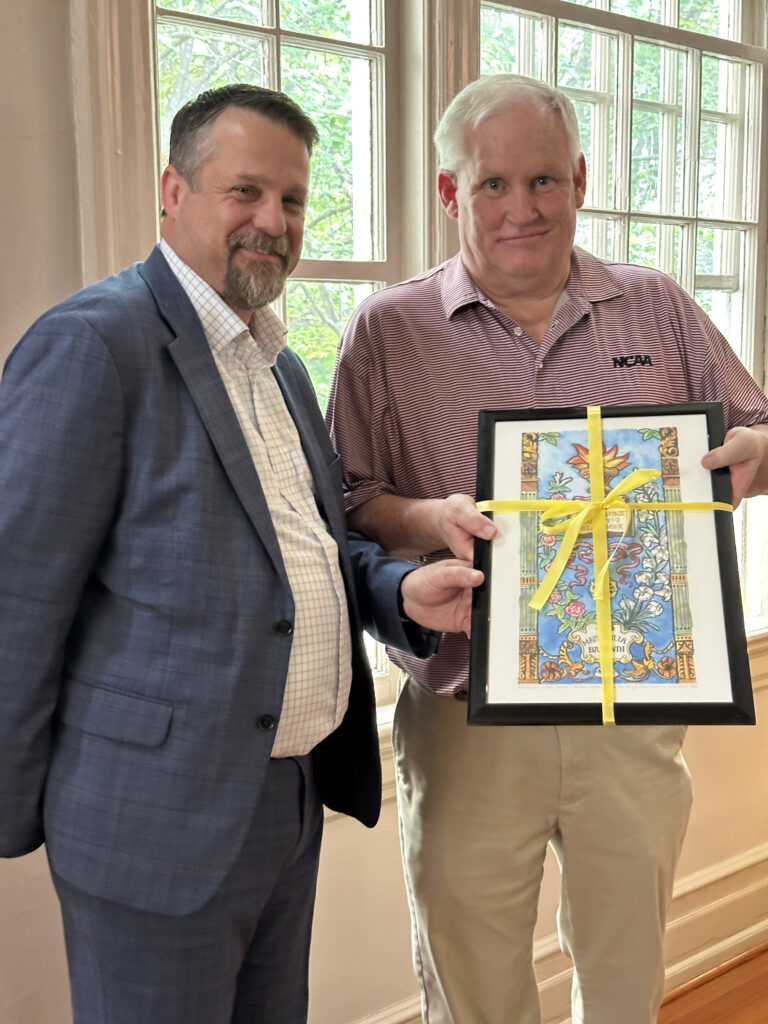
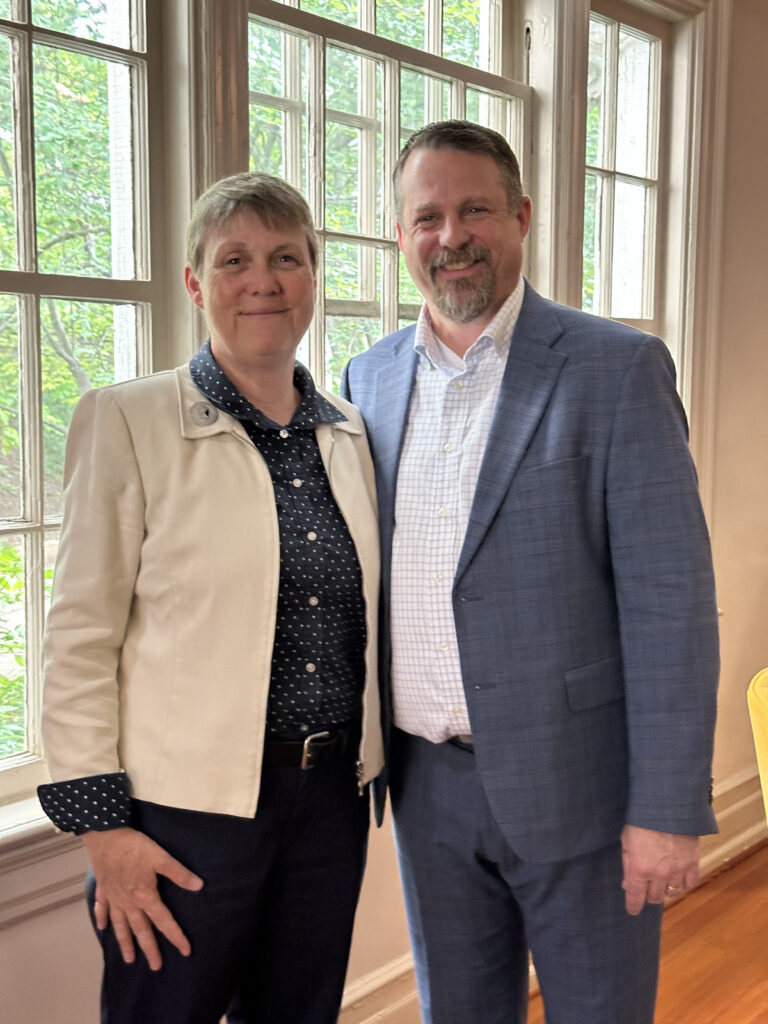
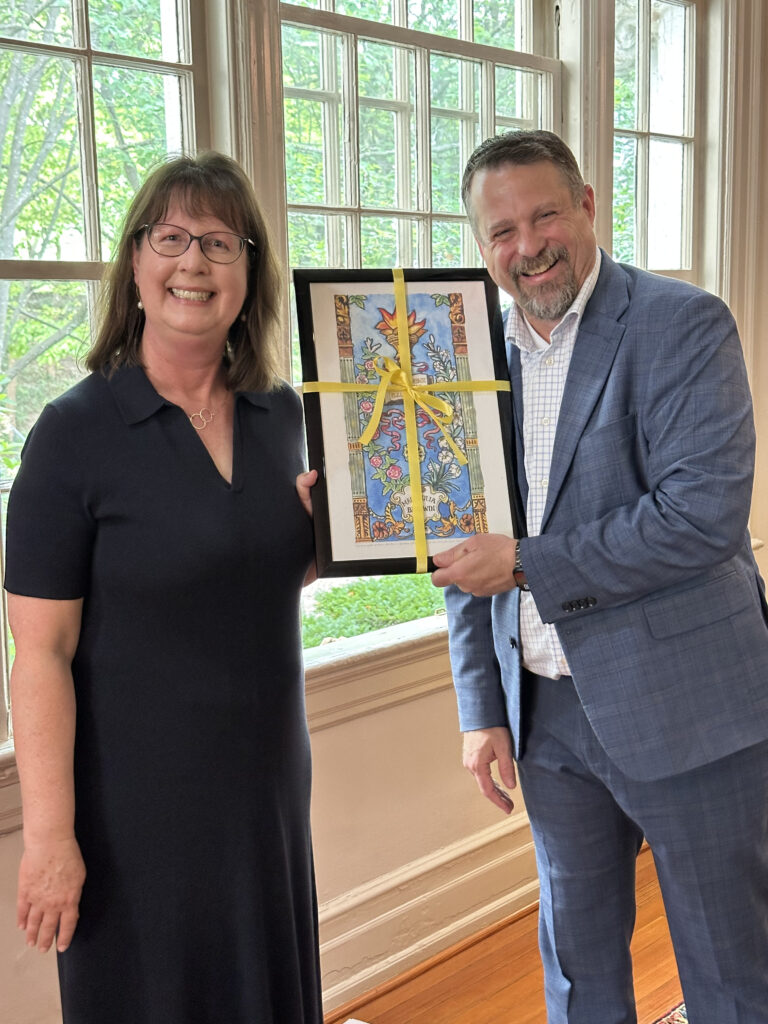
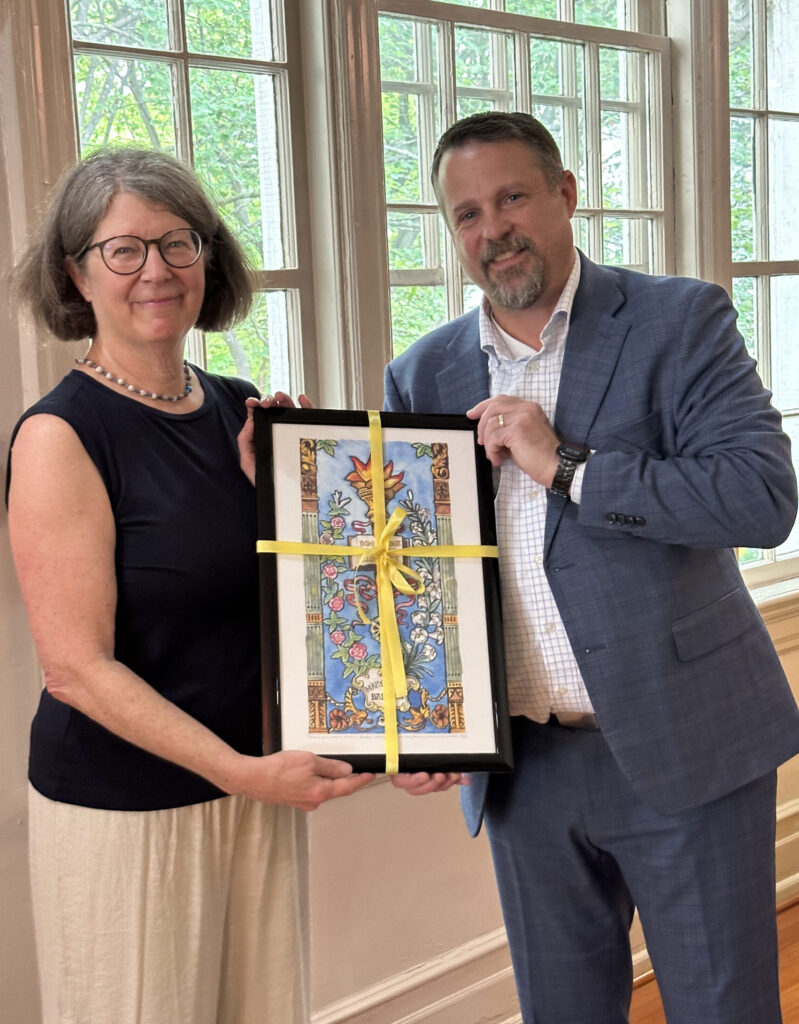
Retirees
2026 retirees reflected on their careers at Mary Baldwin, sharing memories, favorite projects, and the people and experiences that meant the most to them. Responses edited for length and style.
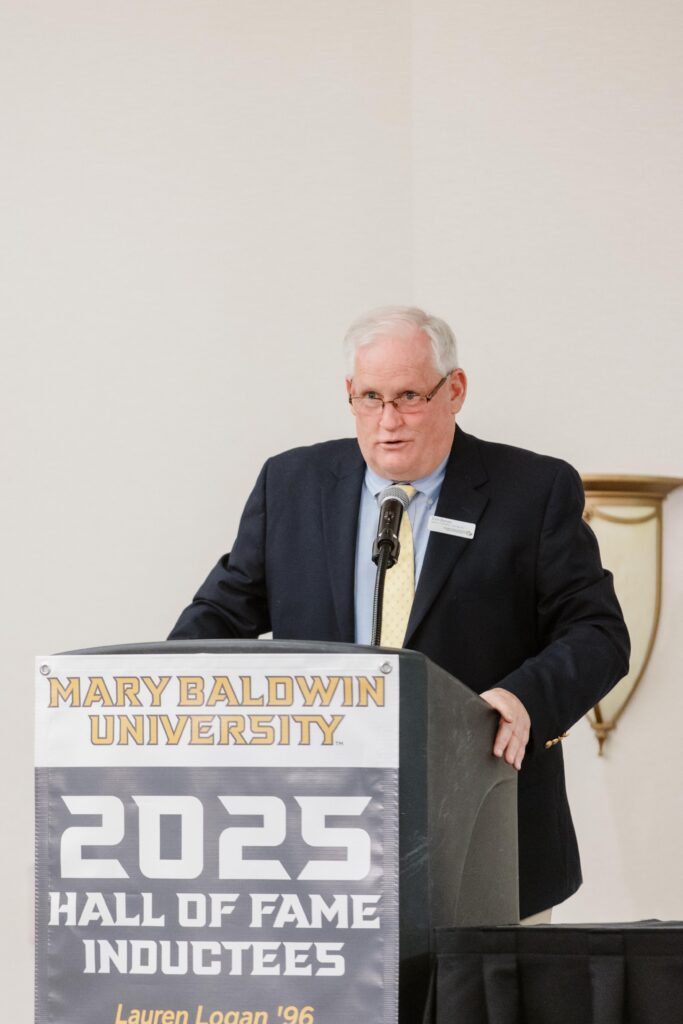
Tom Byrnes,
Athletic Director
Started in August 2019, just a few days before fall teams’ first practices
Special accomplishments or favorite projects:
Just a month after I arrived, I met with the university leadership to discuss how to meet NCAA minimums in sport sponsorship — we needed to add one men’s sport. After lengthy discussion, considering a dozen options, we agreed to add men’s basketball.
Four years later, we won the USA South championship in front of an overflow crowd at the PAC (some watched on the big screen in the dance room just down the hallway from the gym) and advanced to the NCAA Division III championship tournament. That was a culmination of a lot of hard work by some great student-athletes and coaches — a great team effort.
But I will also note the other team efforts — when we hosted soccer or basketball playoff games. The entire athletic department chipped in to support the student-athletes, their fellow coaches and MBU. It’s the best feeling in the world when the staff buys into the team!
“Tom loved watching the athletes as they competed, home or away. He celebrated the victories but he knew it went far beyond the scoreboard. There have been many tireless nights and long hours but he made a difference in the athletic department.”
Christy Shelton, Associate Athletic Director
Mary Baldwin memories:
Certainly the men’s basketball title is a stand-out memory, as well as the many playoff teams in softball, soccer, women’s basketball and the award winners in track and field and cross country.
Nicky Black winning the USA South title, runner of the year, rookie of the year, and all-region awards in fall 2024 was fantastic. We’ve had others win major conference awards the past seven years.
But I also believe Associate Athletic Director Christy Shelton would agree that we “scored” many behind-the-scenes wins in the past seven years, such as the re-start of the annual hall of fame ceremony, upgrades on the outdoor sound systems for softball and soccer, new backboards and shot clocks for basketball, and the move to Grottoes for our home baseball field.
Retirement plans:
After helping MBU Athletics on a part-time basis, I plan to move back to Shippensburg, Pennsylvania, where I went to college for two degrees and worked as a sportswriter at the local newspaper for more than a decade.
I also began my officiating career that lasted for four decades there (soccer, basketball, baseball, and softball). I would recommend officiating as an avocation to anybody so inclined. It’s a great activity, a chance to earn some nice “gas money”, make life-long friends, and continue in a sport(s) the official enjoyed as a participant.
If something fun works out, maybe I’ll be able to continue to contribute to collegiate athletics in some positive way.
What he’ll miss most:
I will miss working with many here, and I’ve made many, many friends here and around the country in NCAA Division III during my career.
But nobody tops Christy Shelton. She’s the best. I can guarantee no other person at MBU puts in the behind-the-scenes time and effort for the success of the university that she does. She’s gold! I will miss seeing her and working with her daily.
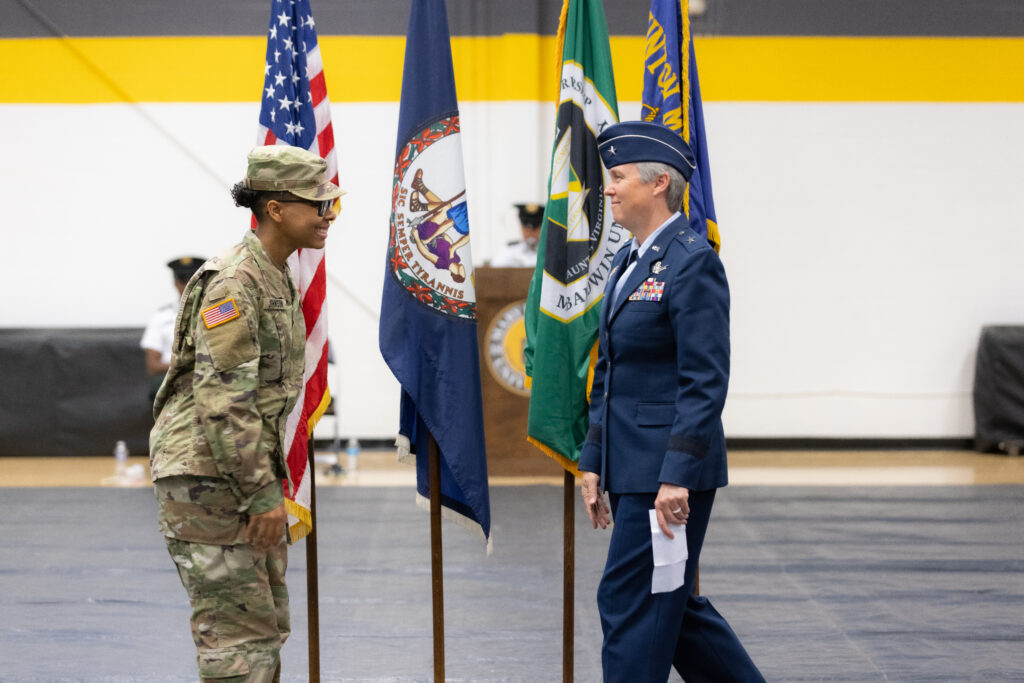
Brig. Gen. Terry Djuric, Senior Advisor to the President and VWIL Commandant
Appointed in September 2013 following a nationwide search for the next VWIL commandant
Special accomplishments or favorite projects:
Celebrating VWIL’s 30th anniversary alongside the VWIL Alumni Chapter. Creating VWIL’s very successful Citizen Leader Program. And honoring the VWIL Class of 2022 with the distinction of commissioning the largest percentage of their graduating class at 81% (18 military officers).
Mary Baldwin memories:
I am deeply grateful for the opportunity to work with the Virginia Women’s Institute for Leadership, Reserve Officer Training Corps, MBU Marching Band, Campus Safety, Emergency Operations Team, Facilities Management, and Title IX. I enjoyed working alongside dedicated students, staff, and faculty on both campuses.
I am particularly proud over the past decade of recruiting over 600 undergrads, increasing cadet retention to 75%, mentoring over 500 cadets and alumni, commissioning 99 military MBU graduates, teaching seven courses to 3,000+ students, writing three critical university policies, and raising $10.9M in grants, scholarships, and sales.
“General Djuric embodies what it means to lead with purpose, compassion, and unwavering dedication. She is consistently the first to arrive and the last to leave, always putting her cadets and staff before herself.”
Isabel Basilis ‘24, Former Cadet and VWIL Director of Operations
Retirement plans:
I am committed to remaining on staff at MBU to hire a new commandant, ensuring a smooth transition, and bringing in the next class of VWIL and ROTC cadets. Then I’ll take care of my family full time during retirement.
What she’ll miss most:
The cadets.
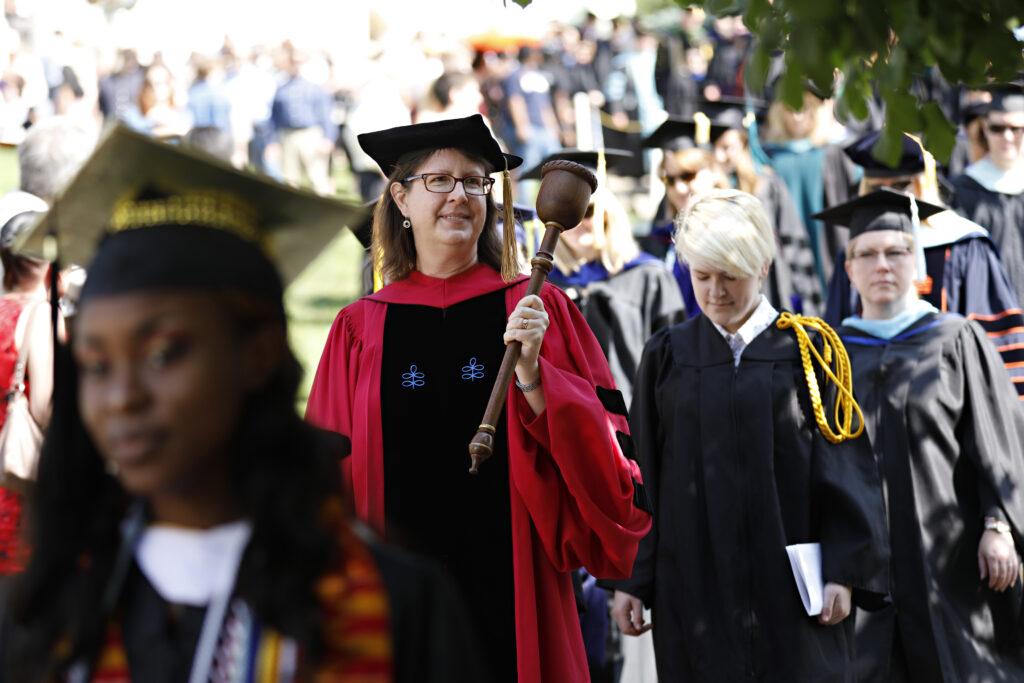
Dr. Amy Diduch, Dean of Institutional Effectiveness & Gold College, Professor of Economics
Arrived in the fall of 1995 with a specialty in labor (decisions and policies about work and leisure) and development (policies that foster human development and economic growth in lower income countries)
Starting at Mary Baldwin:
My first semester I was asked to teach Money & Banking and Intermediate Macroeconomics. Money & Banking will rank as my least favorite course ever taught, but I came to love teaching Macro.
I arrived on campus one year after email was introduced at MBU. Weekly announcements, declaration forms, committee minutes — everything was still on paper. Our print shop was swamped at the start of each semester creating the bound reading packets and syllabi for every faculty member. There were no SmartBoards in the classrooms, no learning management systems; I routinely ended up with chalk smeared on my sleeves or pants legs.
I worked with fantastic economics colleagues for many years — Drs. Judy Klein and Jane Pietrowski. We believe we comprised the only all-female economics department in the country!
Special accomplishments or favorite projects:
In my time on faculty, I developed new courses for the economics department: Poverty & Inequality in the U.S., Environmental Policy, and Experimental Economics. I also served as director of the Honors Program, advisor to the Honor Council, Chair of the Educational Policy Committee, and Faculty Marshal (along with other areas of service).
Over the past two years I have had the opportunity to work with lots of different faculty and staff on programs that are now known as the Mary Baldwin Signature. In particular, I worked with a small but extraordinarily collaborative team in spring 2025 to design The Commons and with a large number of faculty and staff to develop the Skills Portfolio Initiative. In summer 2025, I conceived the idea of Skills Stacks — groups of courses that develop a specific durable skill — and set up the policies that will enable their development. I believe the Skills Portfolio Initiative will highlight what a liberal arts-based education already does well and push students to pursue deeper skill sets in areas such as collaboration, communication, leadership, inclusivity, creativity, problem-solving, and data fluency.
I’m proud of the many “a-ha moments” experienced by my students as they learned how to apply economic thinking to policies, spotted the implications of game theory models, engaged in challenging debates, or found relationships in data. Some have gone on to graduate programs in economics, public policy, or law but most have taken their reasoning and strategic thinking skills into the workforce.
“Amy has influenced three generations of students at Mary Baldwin, creatively disguising complex economic theories into classroom games. She didn’t just teach concepts – she made them come alive. Her skills in data visualization also brought clarity and insight to important decisions as an administrator, reflecting both her analytical brilliance and her dedication to improving this institution. Amy has a way of making information meaningful, useful, and actionable — a gift that benefited colleagues and students alike.”
Dr. Laura Showalter, Professor of Political Science
Classroom memories:
My goal in Experimental Economics was to push students to improve their reasoning skills by considering the likely actions of others that they interact with. In a day focused on all types of auctions, I would auction off a dollar bill to the highest bidder, with the rule that the second highest bidder was on the hook for whatever their last bid was. Think about your own response: if you enter the auction, you don’t want to be the second highest bidder so you have an incentive to keep bidding higher. Students often entered the bidding casually before realizing, as the high bids approached $1, that they were stuck. One year, two particularly competitive students escalated the bids up to $10 before quitting, with the loser paying me more than $9 to finally get out of the competition. (I did use the $9 to buy snacks for the class!)
When Environmental Policy was a new course, I only had two students enroll. I was lucky that the dean allowed me to teach it anyway! Both students — Hannah and Erin — were honor scholars and acutely interested in the material, so we ran it as an Oxford style tutorial, where all of us read and discussed current research in the field. I particularly enjoyed our discussion of open-access fishing theory and policy because we accompanied it with a feast of goldfish crackers, Phish food ice cream, and fish-shaped gummies in my office.
In the spring term of 2017, we reached the topic of immigration in my Labor Economics course in the afternoon when a demonstration in support of immigrants was taking place at the Augusta County courthouse in Staunton. My students expressed a desire to skip class in order to attend the demonstration, so we collectively agreed to hold a mobile class that day; we talked about the theory and evidence surrounding migration decisions and the economic impact of immigrants as we walked down the hill to the courthouse.
I have been so lucky to have a long-term colleague willing to collaborate on interdisciplinary and creative classroom activities; Dr. Laura Showalter and I have merged political science and economics students to participate in federal budget balancing simulations; my data analysis students have used regression analysis to predict election results and political science students have critiqued their assumptions. Economics students created forecasts for Laura’s Election Live Broadcast each year (and were about as accurate as professional forecasters).
What she’ll miss most:
The people!! The interactions with students in the classroom, brainstorming sessions with academic affairs colleagues, sitting with a random group of faculty or staff in Hunt dining hall, chatting in the hallways of Carpenter Academic …
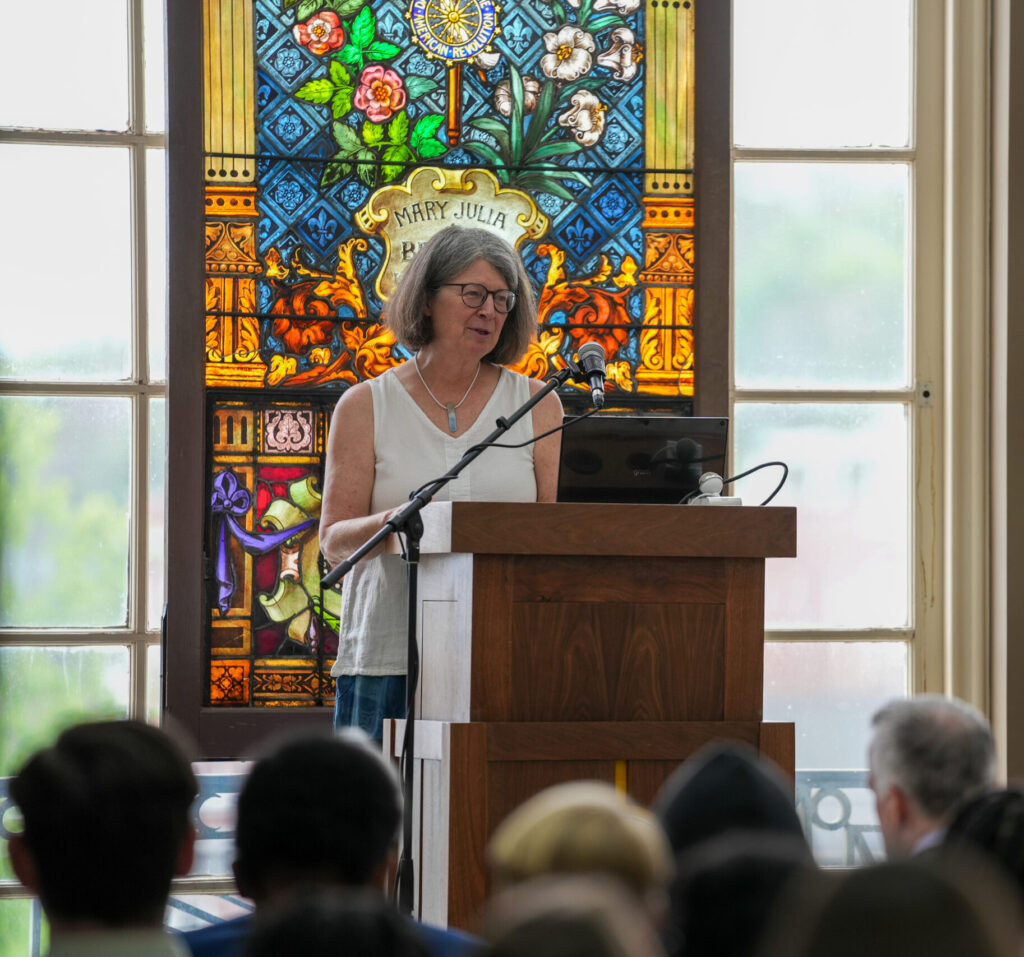
Dr. Mary Hill Cole, Professor of History
Came to Mary Baldwin in 1987 when Dr. Cynthia Tyson was new in her presidency
Starting at Mary Baldwin:
To welcome new faculty, our dean Jim Lott and his wife Pam hosted a lawn party with fountains of their famous whisky sours. That next year the faculty who received raises pooled them to throw a faculty dance party at the old McCormicks restaurant; economics professor Judy Klein won the limbo contest. I knew I had found my people.
Favorite projects:
I served on the first Board of Shenandoah Shakespeare Express (SSE). From 1988 until 2001, when the Blackfriars playhouse opened, Art History Professor Marlena Hobson and I sponsored their plays on campus every semester. SSE performed mostly in Deming art studio, and hundreds of students, faculty, staff, and community members crowded together to see their amazing shows.
I also served on the Mary Baldwin committee that established the Shakespeare and Performance (S&P) Program, with its MLitt and MFA degrees, and I’ve been part of its administration ever since. Another favorite project has been serving since 1992 as Mary Baldwin’s director for the Virginia Program at Oxford.
“Among many proud claims that Mary Baldwin might make, it can boast that for the past (nearly) four decades it has featured one of the world’s preeminent historians of the English Renaissance. Quite beyond her stellar scholarship, Mary Hill is a master teacher of both undergraduates and graduate students, a skilled and gracious pedagogue whose gentle demeanor and rigorous standards makes her classrooms the exemplar of ‘those halls where wisdom reckons.’”
Dr. Paul Menzer, Professor of Shakespeare & Performance
Mary Baldwin memories:
French Professor Anne McGovern and I taught a May Term course on the French Revolution that involved a working guillotine and our role-playing as Robespierre and Marie Antoinette to provoke the students into taking control of the class and experiencing the chaos of a revolution. We succeeded beyond our expectations.
I taught an honors course on Early Modern Englishwomen in which the students collaborated on writing a book devoted to exploring the lives of women. In editorial sessions throughout the semester, students decided the women who would anchor each chapter, the structure of the book, the title, the title page, even the color of the binding. The book, From Maids to Martyrs, is in Grafton Library.
Not many faculty at small liberal arts colleges have the privilege of teaching their research specialty to eager, smart graduate students, but thanks to the S&P program, I have had that joy. This month S&P colleagues gave me such a meaningful honor by naming a Mary Hill Cole Graduate Teaching Fellowship, for which I am so grateful.
Plans for retirement:
I will do some travelling, and next spring I will do some adjunct teaching in S&P.
What she’ll miss most:
MBU colleagues, especially in S&P and the history department. I have been so fortunate to have had history colleagues from day one who were collaborative, excellent teachers and scholars: Ken Keller, Ann Alexander, Kate Franzèn, Amy Tillerson-Brown, Clayton Brooks, Josh Howard.
MBU students, who have taught me so much. Our students come from many different backgrounds and bring their intellectual curiosity and varied talents into our classes. This exciting environment of learning, creativity, and action in and out of the classroom will be hard to lose.
Staunton and Mary Baldwin have an important symbiotic relationship: when you look around Staunton, you see the impact of Mary Baldwin people everywhere:
- Staunton Music Festival, founded by former music professor Carsten Schmidt
- American Frontier Culture Museum, now led by alum, history major, and former CEO of Woodrow Wilson Presidential Library, Robin Wilson von Seldeneck
- Painted murals of community and resilience, created by students and visiting artist Claudia Bernardi, at Booker T. Washington Community Center, the former Newtown Bakery on West Beverley, and our Staunton campus.
- Of course the American Shakespeare Center (ASC), founded by Prof. Ralph Cohen and alum Jim Warren. Faculty and staff donated money to fund the main staircase in the Blackfriars Playhouse (it’s “our” staircase). The ASC, Blackfriars actors, and our S&P program have enriched the Staunton theatre arts scene, coffee shops, and restaurants since 2001.
I’ll be staying in Staunton after I retire. So I won’t be totally missing Mary Baldwin because it and its people are here all around us.
Service Awards
5 Years
Megan Ady
Mary Gilbert
Freeman Grubb
Mary Harvey
Shannon Kolecki
Tyler Matherly
Sarah McCadden
Jennifer McPherson
Meghan Munsey
Pari Paluszak
Caitlin Powers
Andrew Raridon
Elizabeth Richardson
Will Webb
Lisa Wells
Destiny Woodall
10 Years
Sarah Daughdrill
Emily Greene
15 Years
Leighton Carruth
Kristen Egan
Jenna Holt
Katie Low
Brenci Patino
30 Years
Andrea Cornett-Scott