Through a national research collaboration, Mary Baldwin students are gaining hands-on field experience while contributing to new discoveries in salamander science.
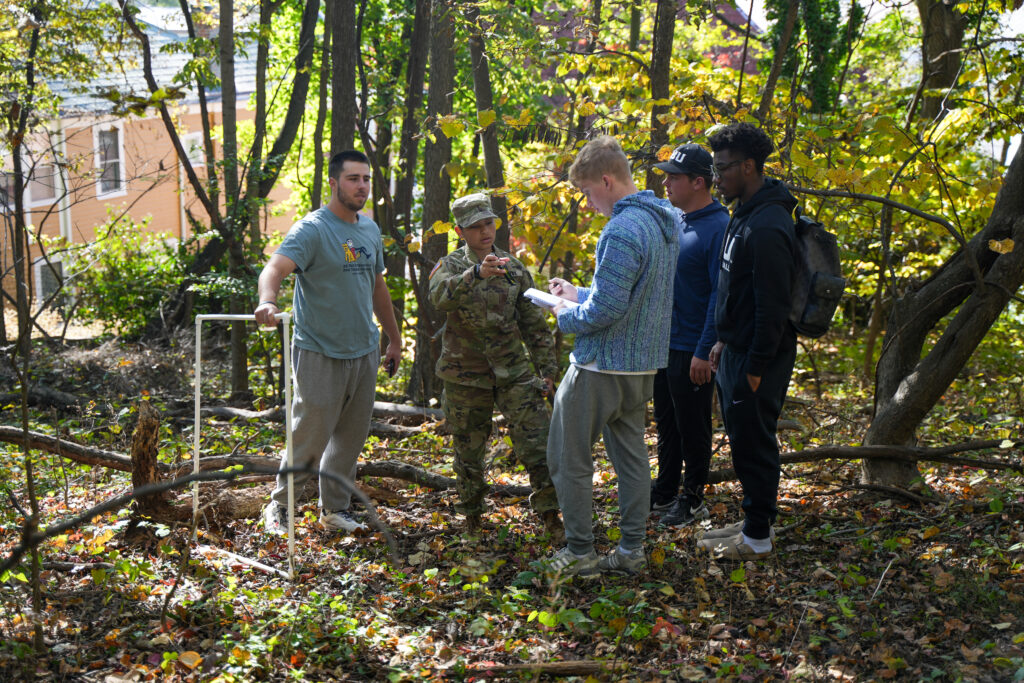
On cool Saturday mornings in the Shenandoah Valley, a small group of students and researchers fan out across wooded sites near campus, carefully lifting wooden boards and scanning the forest floor. What they’re looking for may be small, but the research they’re contributing to is anything but.
At the center of this work is Shelby Shartzer, a recent ecology graduate from Sterling College, who has spent the past year at Mary Baldwin University as part of a national research initiative studying salamander populations.
Shartzer’s position is part of SPARCNet — a multi-institutional effort to better understand salamander ecology across regions — and funded through a post-baccalaureate program known as RaMP, set up by the National Science Foundation to expand access to research opportunities for recent graduates.
“I picked this program at MBU because I was interested in salamanders in the region,” Shartzer said. “This experience felt like a chance to get one step closer to the kind of fieldwork I want to do long-term.”
A Regional Effort with Local Impact
The project focuses on the Eastern Redback Salamander, one of the most widespread salamander species in the United States. At multiple field sites — including MBU’s Cannon Hill and nearby properties — researchers and students work together to capture, measure, and release salamanders as part of an ongoing population study.
Each salamander is carefully documented: weighed, measured, and marked using a process called Visible Implant Elastomer (VIE), a fluorescent tagging method that allows researchers to track individuals over time.
“It’s a sampling project,” Shartzer explained. “We’re collecting data on lifespan, movement habits, and physical changes. Over time, that helps us understand how populations are adapting.”
But the research has also led to unexpected discoveries.
Shedding Light on Biofluorescence
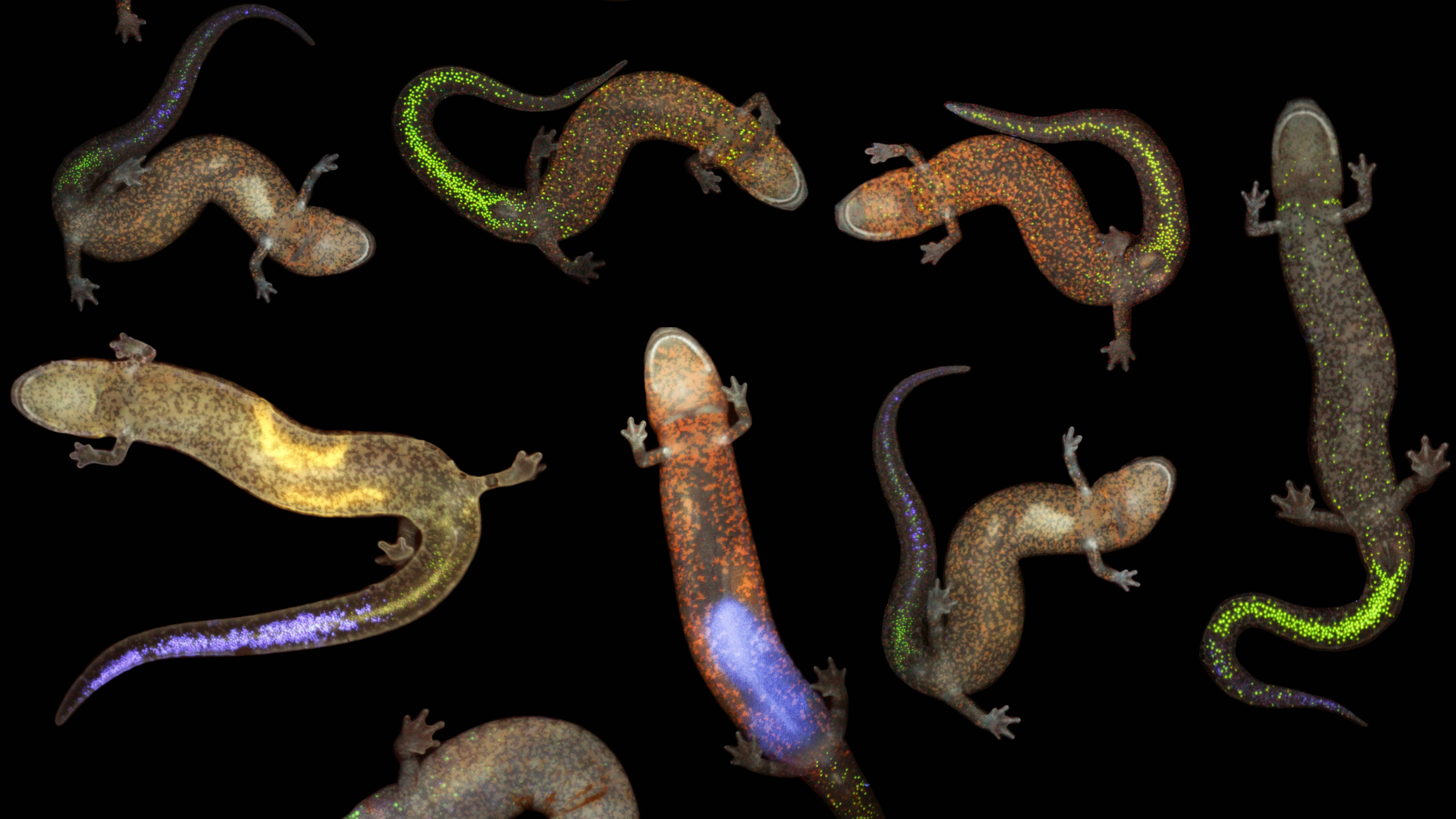
While using ultraviolet light to track VIE tags, salamander researchers abroad began noticing something unusual: the salamanders themselves were glowing.
These scientists documented green biofluorescence in redback salamanders, typically concentrated in glands along their tails. But during her time at MBU, Shartzer identified additional patterns that hadn’t been recorded before, including blue, orange, and even purple and pink fluorescence in different parts of the salamanders’ bodies.
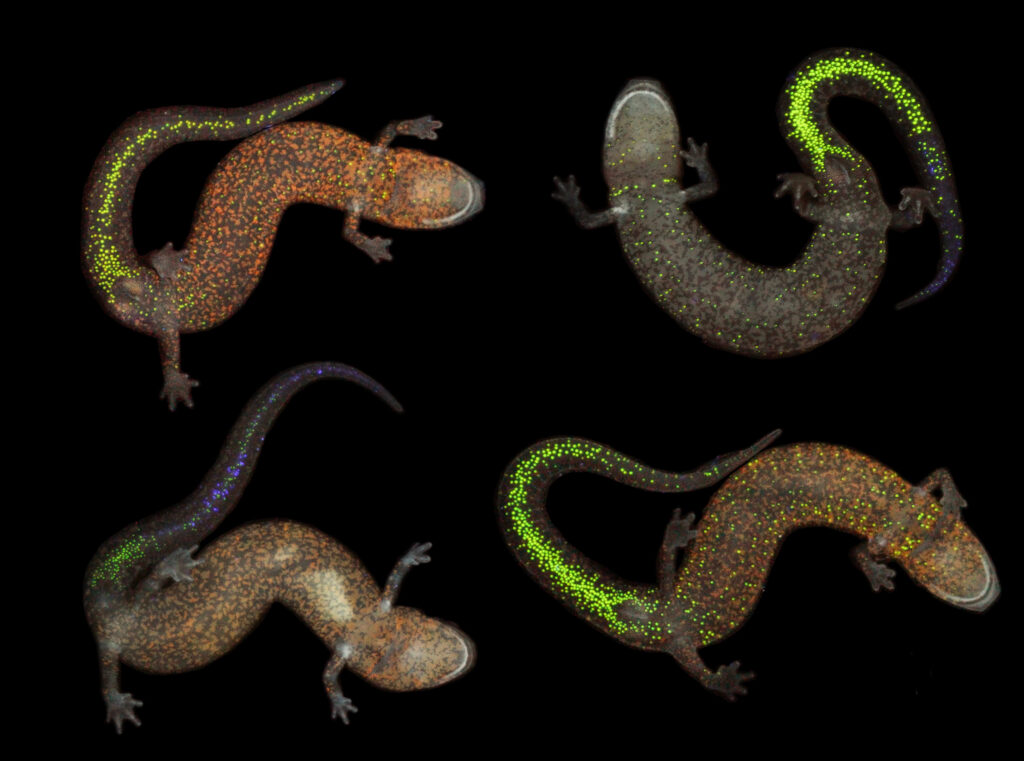
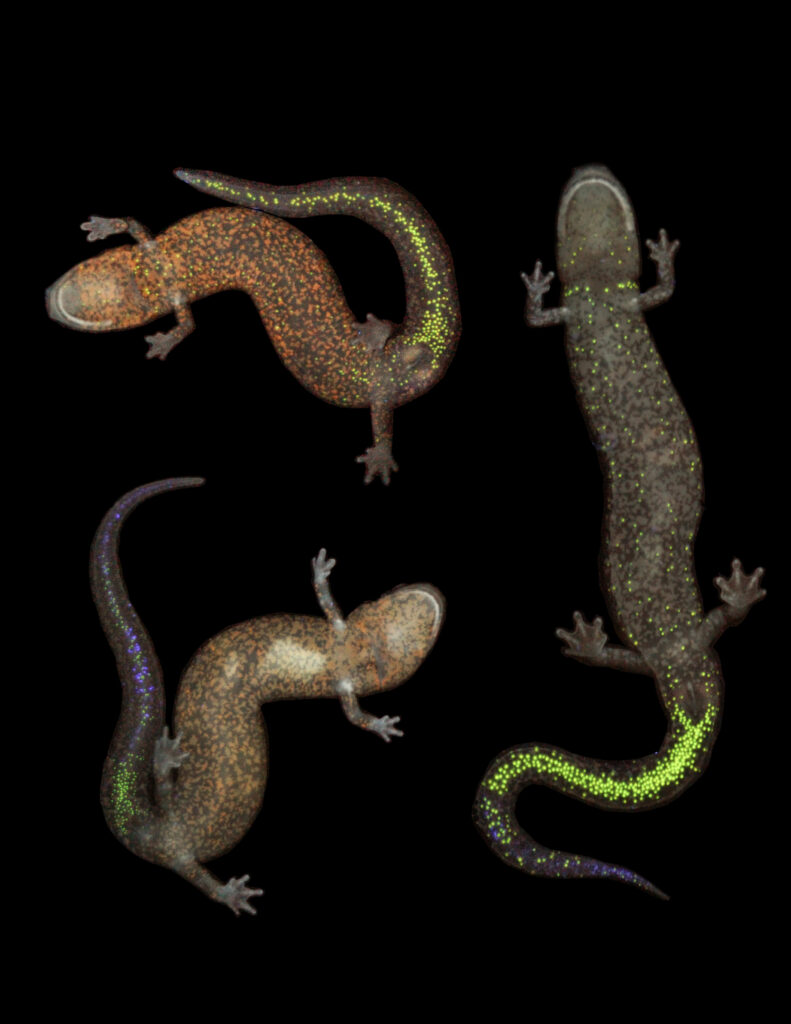
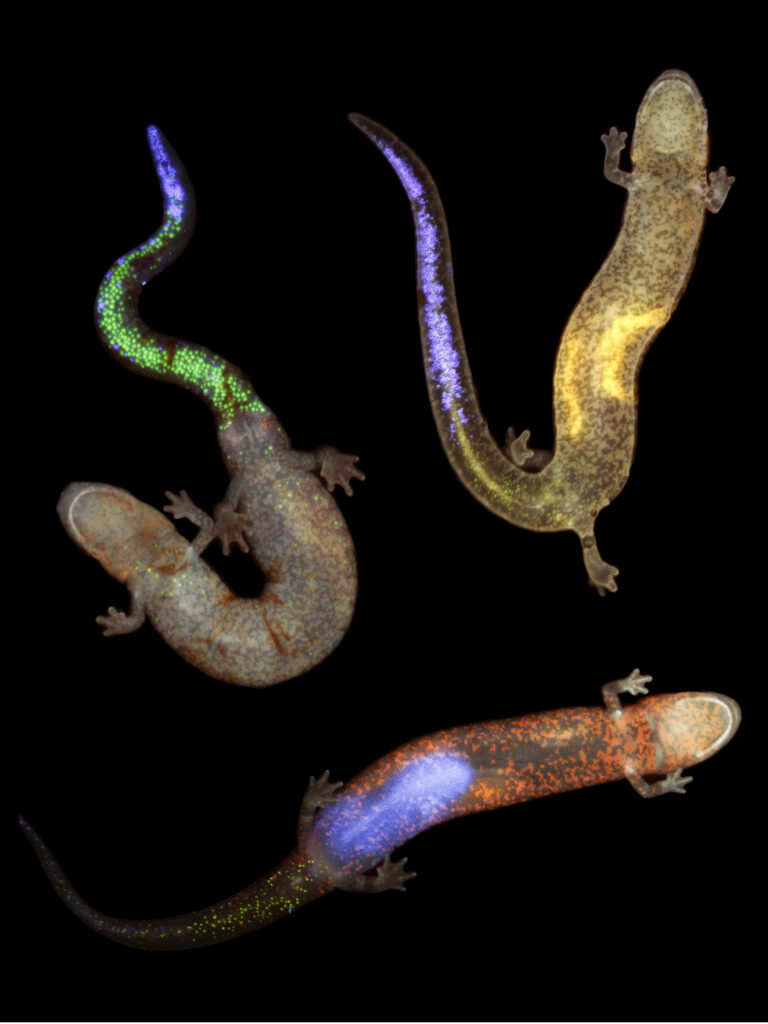
“When I started the project, there was very little known about biofluorescence in salamanders,” she said. “Part of our goal is simply to document how common it is, and what it looks like across populations.”
Capturing those images has become an important part of the work, not just for scientific documentation, but for public engagement.
“The photos are incredibly effective for science communication,” Shartzer said. “They spark curiosity, and that leads to more questions and more interest in the research.”
Learning by Doing
For Mary Baldwin students, the project offers something just as valuable as the data itself: the opportunity to participate in real, ongoing scientific research.
Students regularly join Shartzer and faculty mentors in the field, learning research protocols, collecting data, and contributing to a larger scientific network.
For Micah Joyner ’26, a biology major, that experience has shaped the direction of his own academic work.
“When I was planning my thesis, I was worried it might end up being purely lab work,” Joyner said. “But working with Shelby gave me the chance to get out into the field and do work with real significance.”
Joyner’s research now focuses on comparing biofluorescence patterns between male and female salamanders across different seasons, building directly on the data and observations generated through the project.
In the field, the work is methodical but rewarding.
“We go to three locations and check under rows of wooden boards,” she explained. “We collect the salamanders, measure them, weigh them, note their characteristics, and shine UV light on them.”
Even in colder months, the salamanders remain active, something that surprised Joyner early on.
“I thought in the winter we wouldn’t find them,” she said. “But as long as the environment is moist, they’re there.”
A Pathway to Future Research
Beyond fieldwork, Shartzer has also played a mentorship role, helping students learn research techniques and offering guidance on capstone projects.
“I’ve been teaching undergraduates the field protocols and working with them one-on-one,” she said. “It’s been really rewarding to see them engage with the research.”
That mentorship reflects the broader goal of the RaMP program: expanding access to hands-on research experiences for early-career scientists — and, in turn, creating opportunities for undergraduate students to get involved.
For Joyner, the experience has reinforced her interest in pursuing graduate study.
“I plan on going to grad school, and this has helped me see what that kind of work actually looks like,” she said.
Looking Ahead
As Shartzer wraps up her time at Mary Baldwin, she’s preparing for her next step as an assistant biologist at Mammoth Cave National Park. But the research she helped lead will continue.
Mary Baldwin remains part of the broader SPARCNet collaboration, and Dr. David McLeod recently announced that a new researcher, Siena Guttormson of Juanita College in Pennsylvania, will join MBU in the coming months.
For Shartzer, that continuity is part of what makes the project meaningful.
“The goal is to build something that lasts,” she said. “Not just the data, but the opportunities for students to get involved and discover what they’re interested in.”
And for those students — lifting boards, collecting data, and watching salamanders glow under UV light — that discovery is already underway.