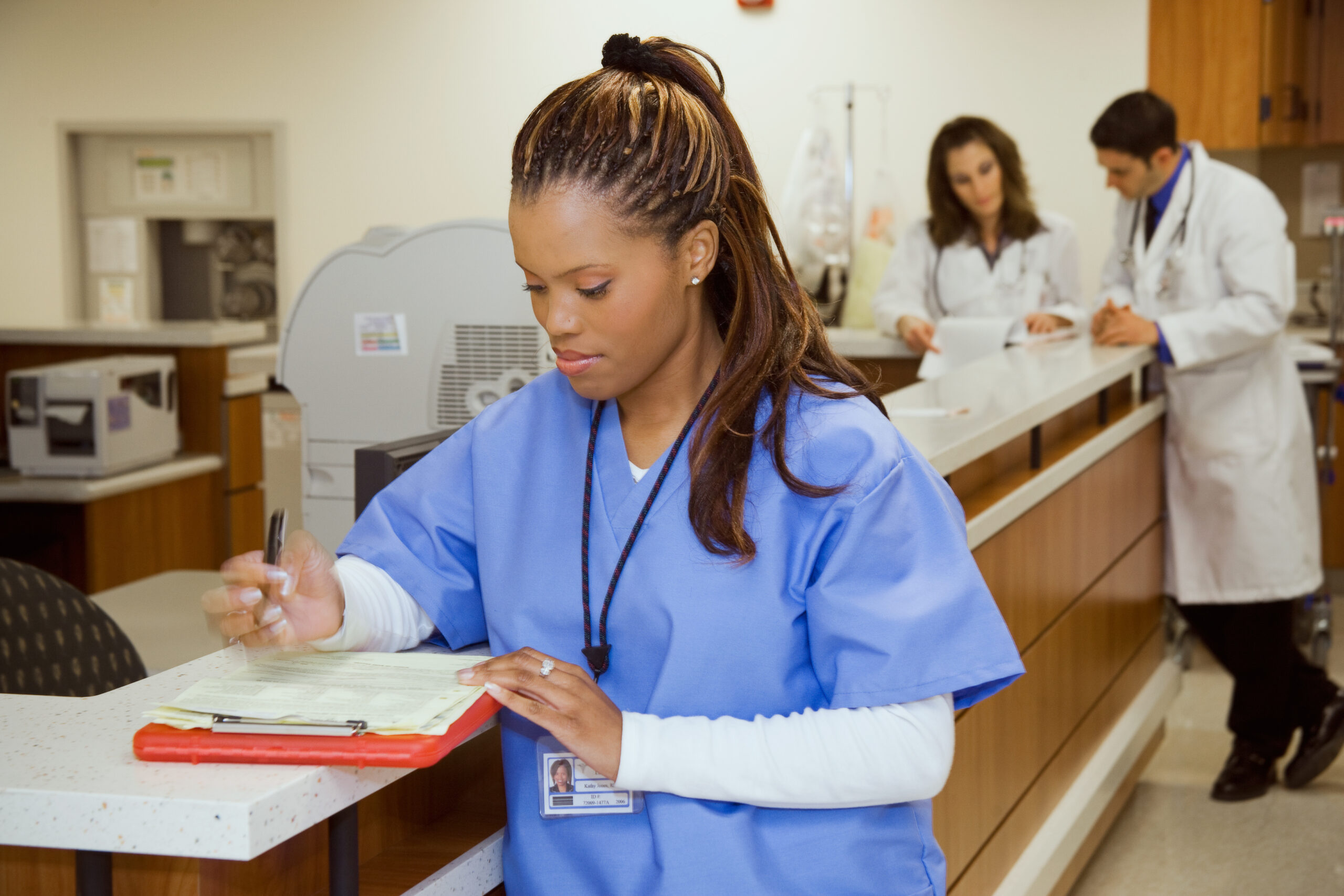
RN to BSN to MSN Track
An accelerated path towards a life-changing career.
Our program is specifically designed to accelerate registered nurses’ path towards a career as a nurse practitioner, healthcare administrator or nurse educator. By completing reduced-cost graduate courses during their BSN, students in this track are guaranteed admission to one of MBU’s dynamic MSN program tracks. Save money, boost your earning potential, and take the next step in your nursing career with this unique program!
- Time to Completion2-3 years
- FormatHybrid
- Degree(s)Bachelor of Science in Nursing,
Master of Science in Nursing
Next steps


Why study nursing at Mary Baldwin?
MBU’s RN to BSN to MSN program helps you bridge your undergraduate and graduate nursing degrees for a smooth transition, guaranteed admission, reduced-cost courses, and lessened course load. Our program will equip you with the skills and experience needed to earn an MSN in
- Administration & Leadership
- Family Nurse Practitioner
- Nurse Education
- Psychiatric Mental Health Nurse Practitioner
This two-part program:
- Let’s you earn your BSN and then transition directly into the MSN program
- Combines online asynchronous and synchronous courses with in-person learning intensives
- Engages you with dedicated faculty in small classes
Next steps
Having compassion for each patient that goes beyond their physical needs is a lifelong goal of mine as a nurse.
Sarah Kauffman BSN ’20
How It Works
- Enter MBU’s RN to BSN program as with your ADN and RN license.
- Talk with your advisor about completing the required Nursing Informatics and Organization & Systems Leadership courses at the 500 level. These graduate level courses will be completed at the undergraduate tuition rate — nearly half their normal cost!
- Graduate from the BSN with a 3.0 GPA and meet all other MSN admission requirements to receive guaranteed admission to the MSN track of your choosing.
- Complete your MSN with six fewer credit hours and upgrade your nursing career.

Accreditation
The Bachelor of Science in Nursing and Master of Science in Nursing programs at Mary Baldwin University are accredited by the Commission on Collegiate Nursing Education (http://www.ccneaccreditation.org).

Our Faculty
Our faculty is made up of healthcare experts with industry-leading expertise and profound empathy. Their commitment to nurturing future healthcare leaders is key to the success of our school.
Cost & Financial Aid
See the cost of an BSN and MSN at MBU, and some of the ways we work with you to make an excellent education affordable for you and your family.
Students in this program track complete six MSN credit hours at the BSN rate, $333.33/credit hour.

Expected Program Student
Learning Outcomes
Undergraduate
The expected student learning outcomes of the RN to BSN program are to prepare confident, competent, and responsible professional nurses who can:
- Integrate leadership principles and processes to ensure safe, quality outcomes of patient care across the healthcare continuum.
- Portray professional values when providing competent, compassionate, culturally sensitive, and individualized care across the healthcare continuum.
- Manage patient care technologies and information management systems when delivering care across the healthcare continuum.
- Integrate personal goals for lifelong learning and for involvement in professional and community service.
- Display accountability for legal, moral, and ethical considerations within current standards of professional practice.
- Demonstrate an awareness of the influence of social, economic, legislative, and demographic factors in the delivery of healthcare in the United States.
- Participate in health promotion and disease prevention at the individual and population level with attention to effectiveness, efficiency, cost-effectiveness, and equity.
- Communicate and collaborate effectively with individuals, families, populations, communities, and the interdisciplinary team across the healthcare continuum to improve the delivery and effectiveness of health care and patient outcomes.
- Demonstrate evidence-based practice by integrating evidence, critical clinical judgment, interprofessional perspectives, and patient preferences in planning, implementing, and evaluating outcomes of care; and
- Demonstrate knowledge of healthcare policy, finance, and regulatory environments relevant to the provision of health care.
Graduate
The expected student learning outcomes of the graduate nursing programs are to prepare confident, competent, and responsible professional nurses who can:
1. Integrate science, theory, and knowledge from nursing and other disciplines as the basis for the highest level of nursing practice.
2. Critically analyze complex clinical situations, organizational practices, and healthcare systems to improve healthcare delivery and health outcomes for diverse populations.
3. Demonstrate advanced competencies in the application of evidence to improve care delivery, health outcomes, and systems management.
4. Use effective interdisciplinary collaboration skills to influence health policy, health outcomes, and healthcare delivery.
5. Utilize information systems and technology to advance nursing practice and transform health care delivery.
6. Assume leadership roles in the development, implementation, and evaluation of evidence-based practice approaches to improve health outcomes for diverse populations.
7. Demonstrate advanced levels of clinical judgment, ethical behavior, and scholarship in nursing practice.