
Physician Assistant (MSPA)
Empowering compassionate clinicians.
Physician assistants (PAs) practice medicine as licensed clinicals in many clinical settings and specialties. Many PAs collaborate with physicians to deliver high quality healthcare. PAs have the knowledge and skills to make clinical decisions, offer various diagnostic, therapeutic, preventive, and health maintenance services. They play a vital role in primary and specialty care across medical and surgical settings. Earning your Master of Science in Physician Assistant (MSPA) from MBU will prepare you to pass the national exam and have the confidence and compassion to serve patients well as a PA.
- Time to Completion27 months
- FormatOn Campus
- Degree(s)Master of Science in Physician Assistant (MSPA)
- CASPA OpensApril 30
- CASPA ClosesOctober 1
- Program StartJanuary
Next steps
Why earn a physician assistant (MSPA) degree at Mary Baldwin?
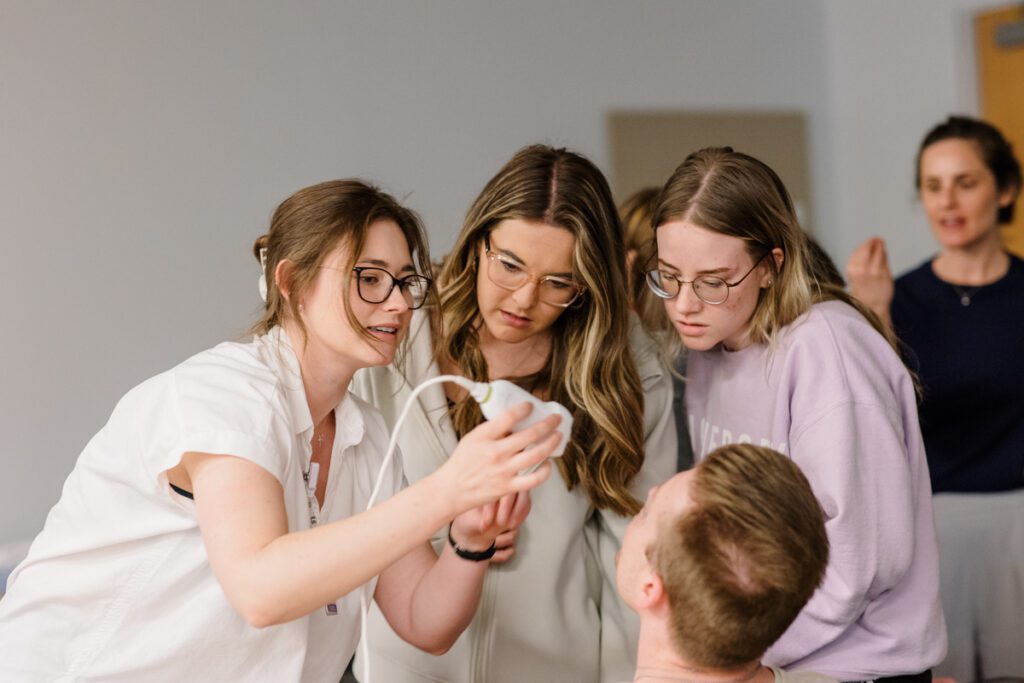
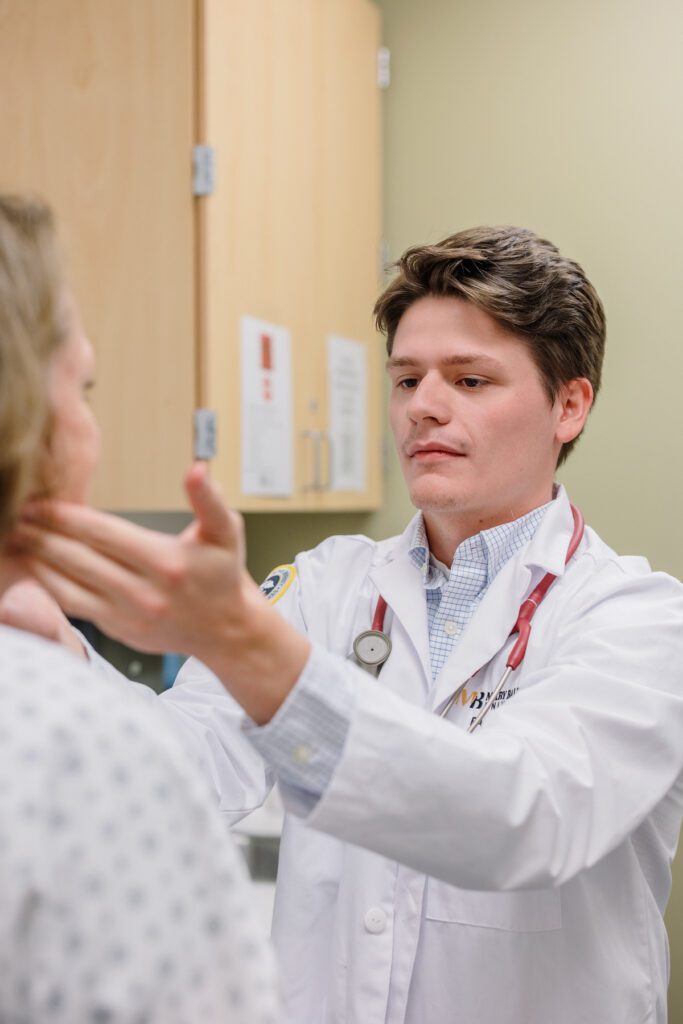
The role of the physician assistant demands intelligence, sound judgment, interpersonal skills, and the capacity to react to emergencies in a calm and reasoned manner. PAs perform physical examinations, diagnose and treat illnesses, order and interpret lab tests, assist in surgery, and provide patient education and counseling. As a highly regarded PA program in Virginia, the Master of Science in Physician Assistant Program at Mary Baldwin embraces the team-based, collaborative, and interprofessional approach to patient care.
Shared Experience
Studying in a cohort model means that you’ll start and finish the PA program with the same group of fellow students, so you’ll find a strong community of support as you complete your courses. You’ll also get to work together in special interprofessional case study groups, research, and clinical skills scenarios.
Collaborative Training
Collaboration extends to students from other disciplines like occupational therapy, physical therapy, medicine, nursing, and social work. Our PA program’s curriculum prepares our graduates to practice the highest quality patient care in a rapidly changing healthcare environment.
Immersive Experiences in the Field
Through our partnership with local community hospitals and healthcare organizations, PA students are able to begin clinical experiences immediately. This access enables them to build communication, relationship, and clinical skills right off the bat during their first year. Overall, our program emphasizes spending more hours in the field to better prepare you for future practice.
As a result, 100% of MBU graduates ultimately passed the PA national exam (2025) and were employed within six months of earning their PA degree (2024).
Next steps
I cannot begin to express how prepared I felt entering the workforce after completing MBU’s PA program. I’m a new graduate functioning independently and serving as a sole provider managing a variety of conditions at a very busy, very well-established practice.
Montana Weitzel, MSPA ’21
Courses & Curriculum
All didactic courses (15 months of instruction) will utilize the most appropriate and up-to-date instructional techniques, including lecture/discussion, interprofessional group and problem-based discussion, case studies, presentations, clinical skill scenarios, and hospital-based experiences.
The clinical phase follows the didactic and lasts for 12 months. Students will study in six-week rotations with practitioners in the areas of family medicine, internal medicine, emergency medicine, pediatrics, women’s health, behavioral medicine/mental health, and general surgery.
This is the first of two courses designed to provide a systematic presentation of pharmacologic agents based upon drug group classification, nature, mode of action, toxicity and clinical therapeutic applications.
This course is designed to provide students with foundational concepts and skills to help build resiliency and prevent burnout by completing two distinct programs, Mental Health First Aid (MHFA), and the Healer’s Art (HART). MHFA teaches students to identify, understand, and respond to signs or symptoms of mental health or substance use challenges, focusing on improving mental health literacy and reducing stigma surrounding mental health challenges. HART encourages students to engage in discovery-based, experiential learning that addresses a hidden crisis in medicine – the growing loss of meaning and commitment experienced by clinicians nationwide under the stresses of the current healthcare system.
This course provides instruction in clinical diagnostics, which includes three modules: laboratory and diagnostic studies/immunologic review, ECG interpretation, and radiological imagery. Through combined lectures, case discussions, demonstrations and practice sessions, students learn how to order and interpret a variety of laboratory and diagnostic studies performed by the provider or received through a referral in daily clinical primary care practice. Emphasis is placed on interprofessional collaboration and team-based care.

Our Faculty
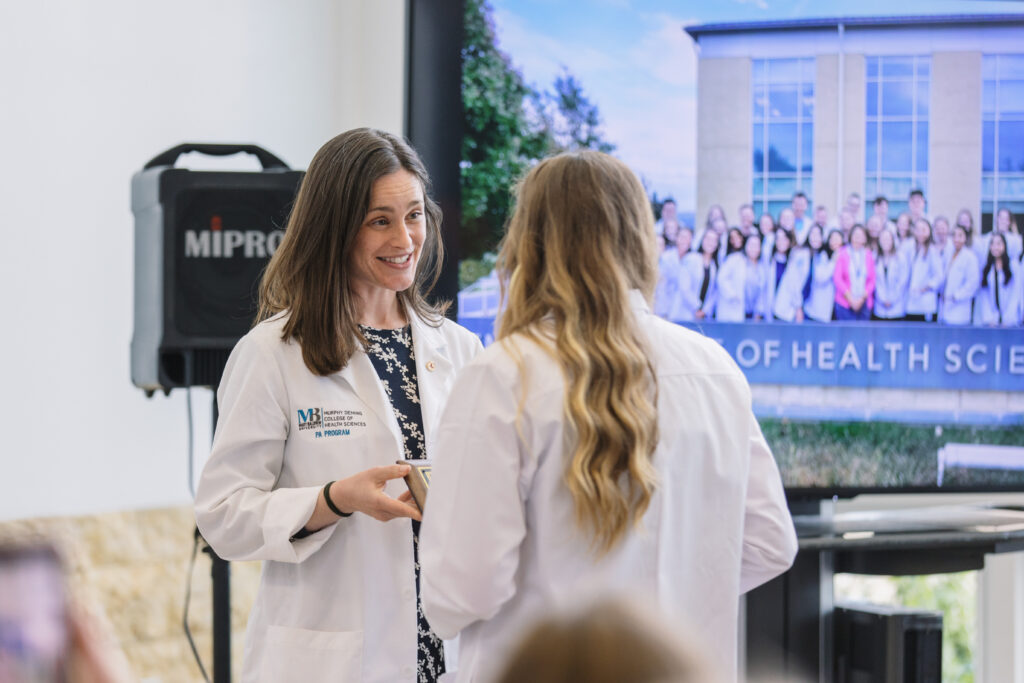
Our school’s faculty is made up of skilled professionals with extensive real-world experience in their practice areas. They are committed to seeing you succeed, offering one-on-one mentorship and real-world experience.
Murphy Deming Student Services
Our team is dedicated to ensuring Murphy Deming students receive a high-quality student experience and support for their well-being, development, engagement, and success.
Career Opportunities
PAs are dynamic and well-rounded providers who work in various areas of practice and can be found in nearly every specialty of medicine:
- 16.4% in family medicine, addressing a wide range of conditions, emphasizing prevention, and providing continuity of care while serving their communities
- 11.5% in orthopaedic surgery, supporting musculoskeletal procedures and providing care in emergency departments and urgent care centers, or serving as care coordinators
- 7.8% in emergency medicine, examining and evaluating patients; ordering and interpreting lab tests; and diagnosing and treating in the ER
- 4.6% in urgent care, providing immediate outpatient medical care for acute and chronic illness and injury
- 4.6% in general internal medicine, addressing the diagnosis, treatment, and care of adults, ranging from healthy individuals to those with complex illnesses
- 4.2% in dermatology, evaluating, diagnosing, and treating a wide variety of skin-related health conditions, both medically and surgically
- 3.1% in cardiology, working in a variety of settings among diverse patient populations and helping to meet the increasing demand for cardiovascular care
- 3.4% in hospital medicine, providing general medical care to hospitalized patients: coordinating care, examining patients, and ordering diagnostic testing and lab work.
- Additionally, 1-3% of PAs respectively reported specialties in each of the following areas: psychiatry, critical care, education, obstetrics and gynecology (OBGYN), General Surgery, Neurosurgery, Hemecology/Oncology, or administration.
Source: AAPA 2025 Salary Report: Key Facts and Figures and AAPA Areas of Practice Guide
Next steps
Cost & Financial Aid
A great education is worth it. Our mission is to help you bring your aspirations to life.
Additional Program Information
Professional Licensure Disclosure
Mary Baldwin University only accepts students from areas where it meets the
educational requirements for licensure. If you’re interested in admission but not currently located in one of these areas, please reach out to admissions or the program director to have a conversation about your individual situation. We’re happy to help you think through the requirements.
For information on which states and territories our program meets the educational
requirements for licensure by location, visit the MBU Catalog.
NOTE: Completion of an authorized educational program does not guarantee licensure or certification. States and territories may have additional requirements such as a background check, jurisprudence examination, other specific training requirements, recommendations, etc.
Mary Baldwin University recommends that students consult the appropriate licensing agency or board in the respective state or territory they intend to practice before beginning any academic program or coursework. Links to state license information can be found at https://catalog.marybaldwin.edu/institutional-professional-licensurerequirements. If students experience difficulty finding the license requirements for a specific state or territory, please contact the program director or admissions.
The PA program has determined that its curriculum meets the state educational requirements for licensure or certification in all states and the District of Columbia.
Student Consumer Information
MBU provides postsecondary education and employment data to help students make informed consumer decisions. Current and prospective MBU students may find information and resources useful in planning for college and careers through the MBU profile published by the State Council of Higher Education for Virginia (SCHEV).
Technical Standards
View the Minimum Technical Standards for Admissions, Continuation, and Graduation for the PA program here.
Policy/Student Handbook
The program maintains a policy/student handbook available to enrolled students. This includes policies of remediation, deceleration, withdrawal, leave of absence, progression, and completion.